












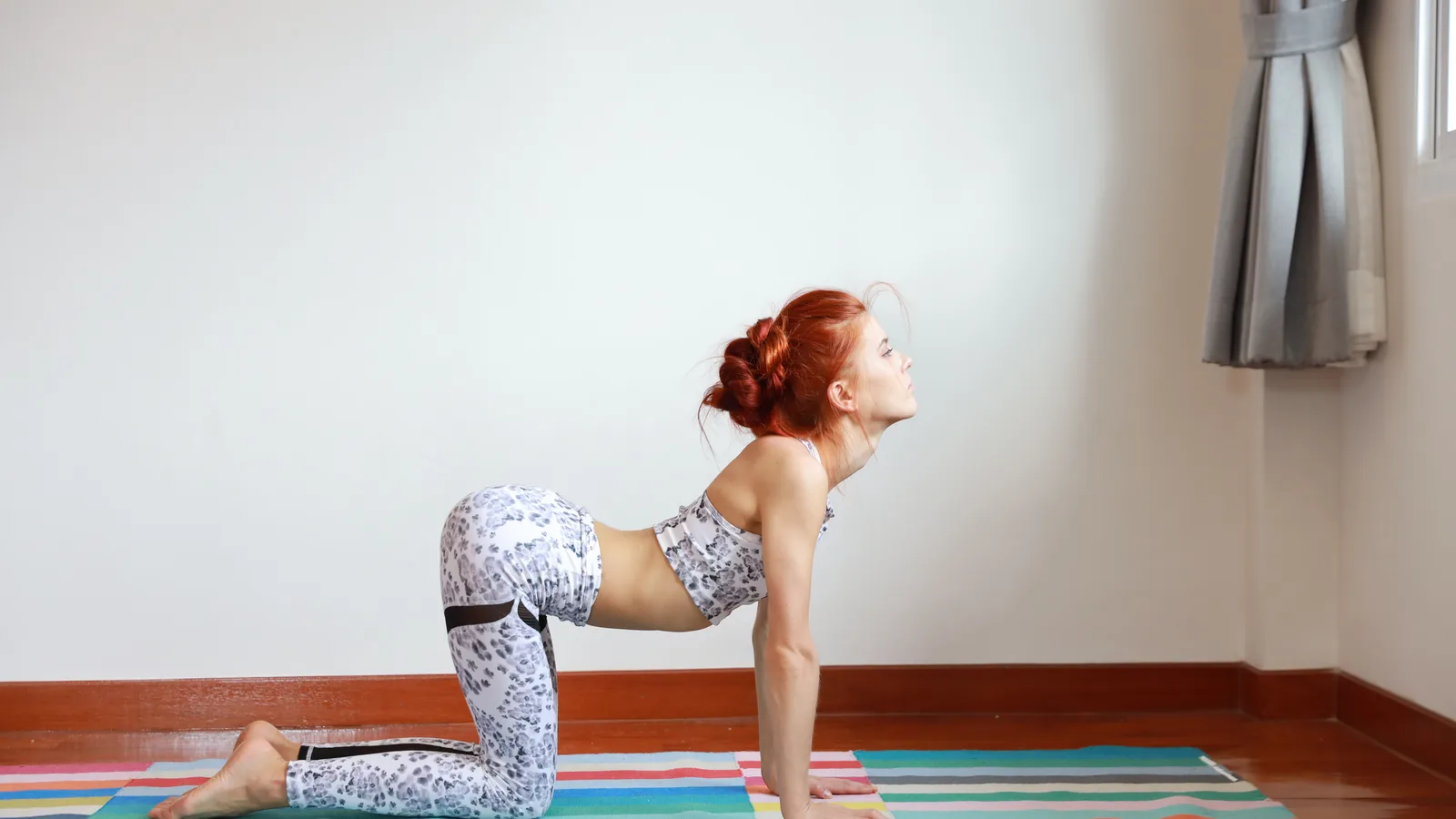
Yoga is one of the first things people try for a back that has hurt for months. The evidence on it is unusually well organized: the American College of Physicians lists it among the recommended first treatments for chronic low back pain, and a Cochrane review pooled the randomized trials. Read together, they give a clear and modest answer.
What the guideline says
In 2017 the American College of Physicians published a clinical practice guideline in the Annals of Internal Medicine on noninvasive treatment of low back pain. For chronic low back pain, it recommends starting with treatments that are not drugs, and yoga is on that list alongside exercise, tai chi, mindfulness-based stress reduction, multidisciplinary rehabilitation, acupuncture, spinal manipulation, cognitive behavioral therapy and several others. Medication is positioned as a second step for people who do not improve.
What 21 trials found
The Cochrane review, updated in November 2022, included 21 randomized trials with 2,223 participants from the United States, India, the United Kingdom, Croatia, Germany, Sweden and Turkey. Most participants were women in their 40s and 50s, and most trials used Iyengar, hatha or viniyoga styles. The review was not industry funded, and its authors reported no relevant conflicts.
Yoga compared with no exercise, at three months:
- Back-related function improved slightly, by 1.69 points on the 24-point Roland-Morris disability scale. The change considered meaningful to a patient is about 5 points, so the authors called it small and clinically unimportant.
- Pain fell by about 4.5 points on a 100-point scale, against a meaningful change of about 15.
- People doing yoga were more than twice as likely to say their back pain had improved or resolved, though that rests on four trials.
- Physical and mental quality of life probably improved a little.
Yoga compared with back-focused exercise such as physical therapy: probably little or no difference in function at three months, and no clear difference in pain or quality of life.
The side effects
Yoga had more side effects than doing no exercise, mostly a flare of back pain: about 43 people per 1,000 compared with 9 per 1,000, measured at six to twelve months. Compared with other exercise, the rate was about the same, roughly 84 per 1,000 for yoga and 91 per 1,000 for other exercise. In other words, the extra soreness looks like the cost of moving more, not something specific to yoga.
What the evidence does not show
None of the trials could blind participants, and pain and function were self-reported, so expectations may have inflated the results. No trial compared yoga with a sham version. The review authors concluded that blinded trials would be unlikely to find a large benefit.
How to use this
The practical reading of the review is that yoga is a reasonable form of the exercise the guideline recommends, not a stronger one. The authors suggest that the choice between yoga and other exercise can come down to what is available, what it costs and what a person will keep doing. For someone choosing a class, styles like those tested (Iyengar, hatha, viniyoga) emphasize slower, supported poses, and telling the teacher about a back problem lets them offer modifications. Expect some soreness at first, and bring any new or worsening symptoms to a clinician, especially leg weakness, numbness or changes in bladder or bowel control.
This article reports research and expert guidance. It is not medical advice. Talk to your clinician before changing medication, treatment or a medical diet.
Loading comments…