












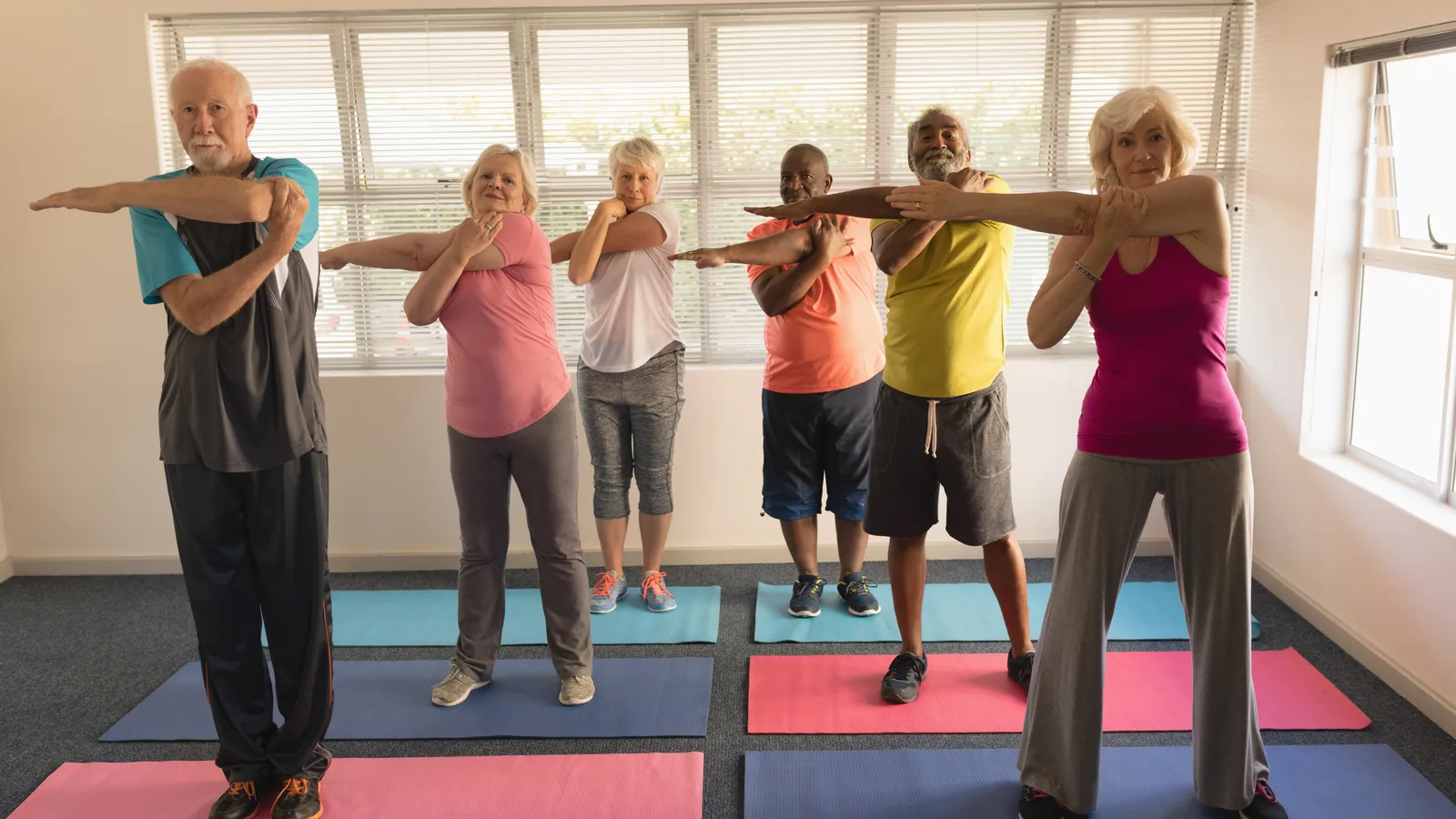
About one in three older adults living at home falls each year, and exercise that challenges balance is one of the best-tested ways to lower that risk. Yoga is full of balance work, from standing on one leg to shifting weight slowly between poses, so it is a natural question whether a yoga class counts. A systematic review and meta-analysis published in Age and Ageing in January 2016 pooled the trials that had tested it.
What the review included
Researchers from Macquarie University, Lund University and the George Institute for Global Health searched six databases through February 2015 for controlled trials of physical yoga in people aged 60 and over. Programs made up only of breathing or meditation were excluded. Six trials, totaling 307 participants, had data that could be pooled, and the authors rated their methods relatively high on the 10-point PEDro scale. The protocol was registered in advance with PROSPERO.
What it found
- Balance: yoga had a small effect on balance performance, a standardized effect size (Hedges' g) of 0.40 across all six trials.
- Mobility: yoga had a medium effect on physical mobility, such as walking and getting up from a chair, an effect size of 0.50 across the three trials that measured it.
An effect size of 0.40 means the yoga groups ended up somewhat better on balance tests than the comparison groups, by a margin that statisticians call small but real. The confidence interval for mobility was wide, which reflects how few trials measured it.
What it does not show
None of the pooled trials showed that yoga prevents falls. The authors wrote that more research is needed to learn whether the better balance scores translate into fewer falls. The review is also a decade old and small: six trials, about 300 people. It does not say which style of yoga, how often or for how long works best.
Where it sits against the guidelines
The Physical Activity Guidelines for Americans recommend that older adults include balance training as part of their weekly activity, alongside aerobic and muscle-strengthening activity, and the CDC's fall prevention program for clinicians, STEADI, lists strength and balance exercise as a core way to reduce fall risk. Yoga that includes standing and single-leg work is one way to get balance practice; the guidelines do not name a single best form.
Questions worth bringing to a clinician
For someone who has fallen, takes medicines that cause dizziness, or has joint replacements or osteoporosis, the useful questions are which poses to avoid, whether to start in a chair-based class, and whether a fall risk screening makes sense first. Many community centers and senior programs run gentle or chair yoga classes built for exactly that starting point.
This article reports research and expert guidance. It is not medical advice. Talk to your clinician before changing medication, treatment or a medical diet.
Loading comments…