












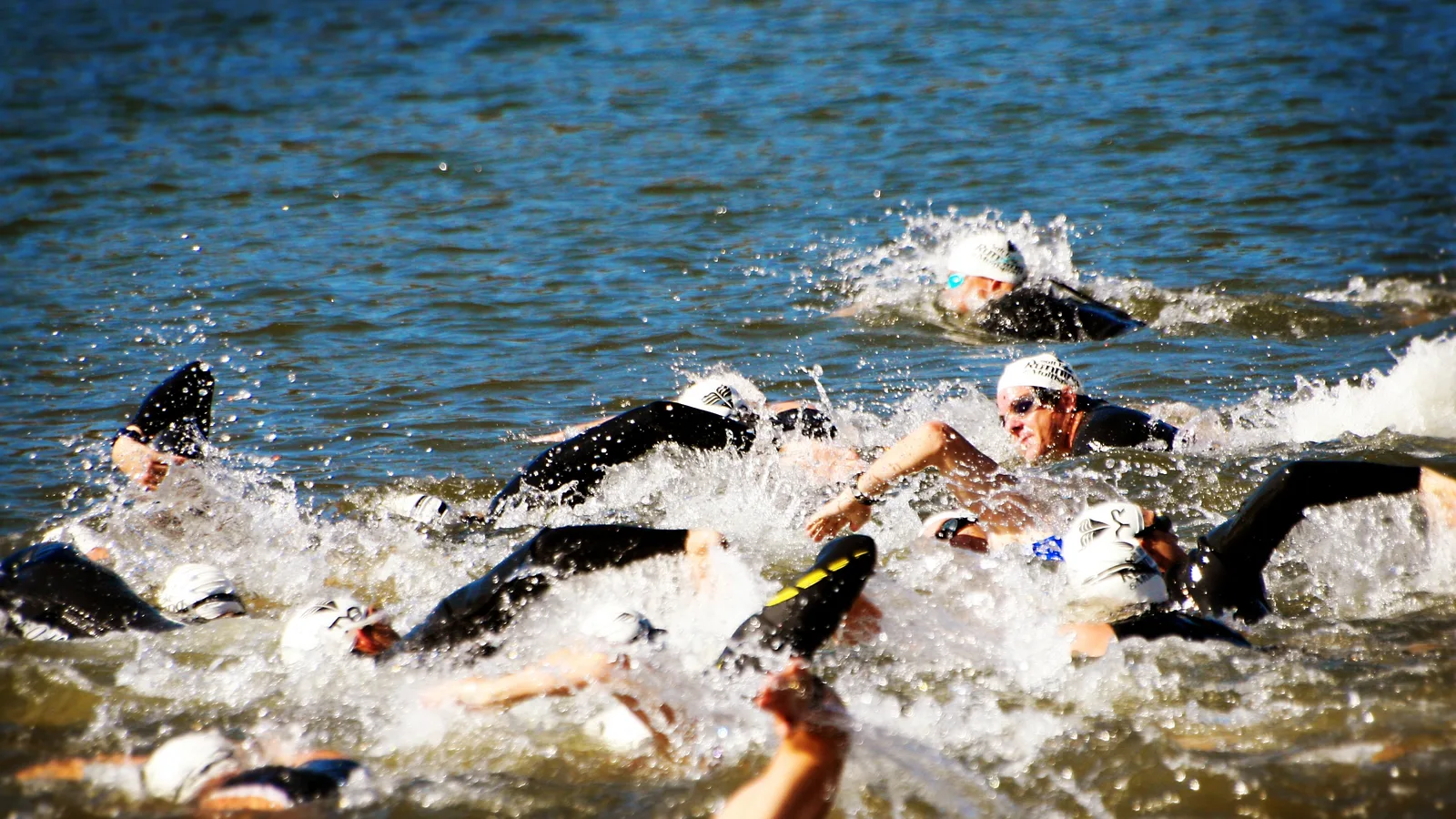
Open-water swimming's world governing body has commissioned the first study of how elite swimmers' bodies handle warm water during actual international races. World Aquatics announced on November 20, 2026, that researchers from Loughborough University in England will run the project with Aspetar, the orthopedic and sports medicine hospital in Qatar, starting in early 2027.
Why now
The sport caps race water at 31 degrees Celsius, about 88 degrees Fahrenheit. At the 2025 World Aquatics Championships in Singapore, open-water race temperatures came close to that ceiling, and World Aquatics names that event as the reason the study is needed. Much of what is known about heat and swimming comes from lab tests, and the governing body says the new work will collect data in genuine competition instead, with the results feeding into future athlete welfare rules and competition policy as more events land in hot conditions.
What researchers will measure
- Core temperature, from an ingestible sensor pill that transmits readings throughout the race.
- Skin temperature, from wearable sensors.
- Heart rate and body composition.
- Water and air conditions at each race.
- How hot the swimmers say they feel, recorded alongside the sensor data.
The project is led by Lee Taylor, a reader in exercise and environmental physiology at Loughborough, with doctoral researcher Kate Markey as its dedicated researcher.
What the earlier race study found
The same Loughborough group published core temperature data in 2024 from 41 elite swimmers racing 7.5 to 10 kilometers at European Aquatics events, in water ranging from about 18 to 25.5 degrees Celsius (64 to 78 degrees Fahrenheit). The highest core reading was 39.5 degrees Celsius (103.1 F), recorded in two swimmers, one of them in water of only 19.3 degrees (66.7 F). In that same race another swimmer's core dropped to 34.6 degrees Celsius (94.3 F), below the 35-degree line that defines clinical hypothermia. The takeaway the researchers drew was that swimmers in the same race and the same water can respond in opposite directions, which is why the new study tracks individuals rather than water temperature alone.
What it means for swimmers who are not elite
The study covers elite racers, and data collection does not begin until 2027, so no new rules follow from it yet. For recreational open-water swimmers, the earlier finding is the useful part: two people in the same race and the same water can heat up or cool down very differently, so the water temperature posted at the start says less about how an individual will fare than it seems. Each race organizer's own water-temperature limits and wetsuit rules are the first thing to check before entering an open-water event.
Loading comments…