












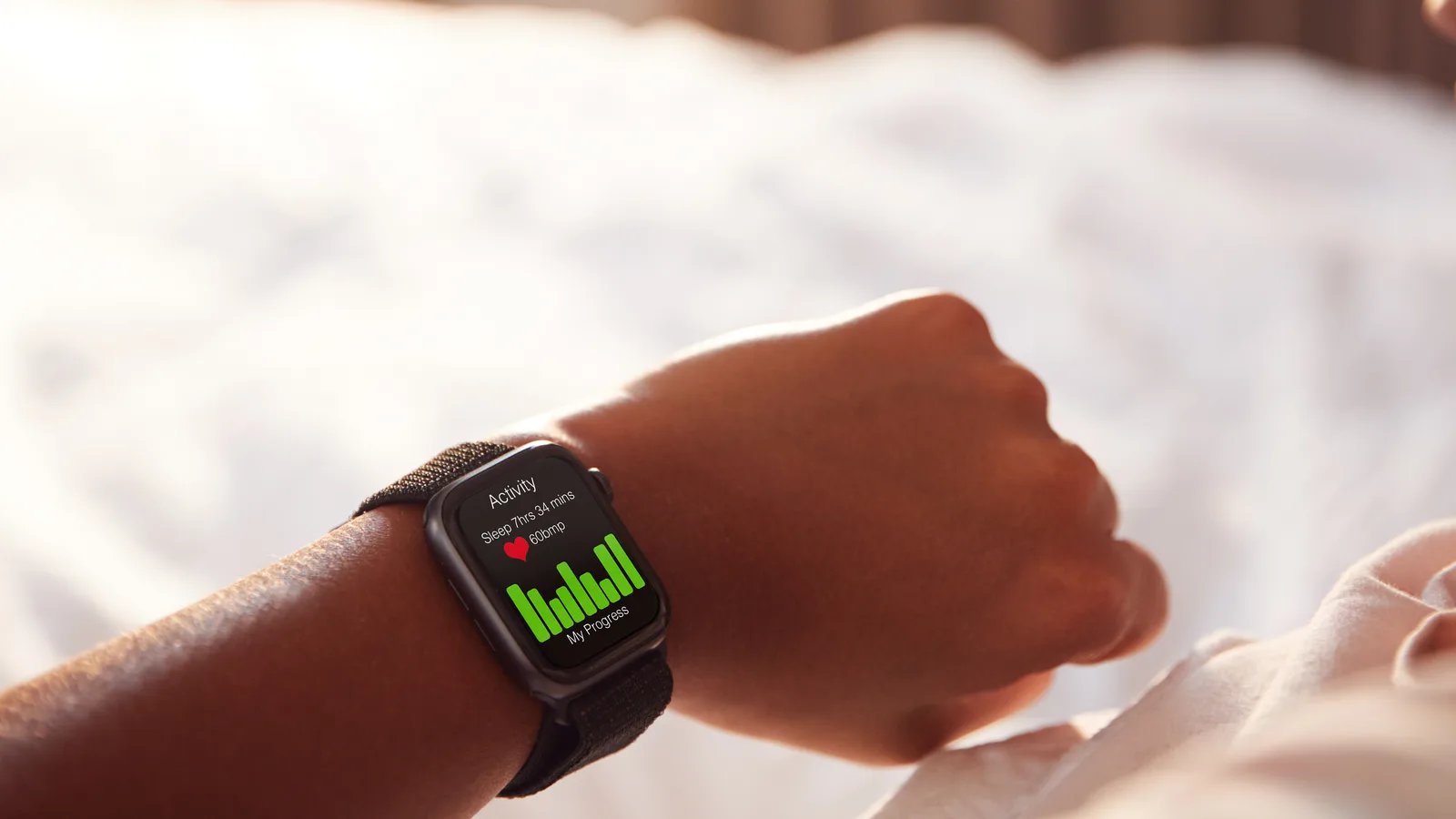
Most fitness watches, rings and straps now report a number called heart rate variability, usually in milliseconds and usually from the night before. It gets compared between friends and read as a daily verdict on readiness. The research behind the number supports a narrower use: comparing a person against their own baseline, measured the same way, over days and weeks.
What HRV is
A heart beating at 60 beats a minute does not tick exactly once a second. The gaps between beats stretch and shrink by small amounts from one beat to the next, partly with each breath: the heart speeds up slightly on the inhale and slows on the exhale. Heart rate variability is the measure of that fluctuation in the time between successive beats.
A widely cited review in Frontiers in Public Health by Fred Shaffer and J. P. Ginsberg (2017) describes HRV as the product of several regulatory systems working on different time scales, among them the nervous system's two branches: the sympathetic side, which speeds the heart, and the parasympathetic side, carried largely by the vagus nerve, which slows it.
The two numbers wearables show
Consumer devices usually report one of two time-domain measures, and they are not interchangeable:
- RMSSD, the root mean square of successive differences between beats. The review calls it the primary time-domain measure for estimating the vagus nerve's influence on the heart.
- SDNN, the standard deviation of the intervals between normal beats. Both branches of the nervous system feed into it. Measured over a full 24 hours, it is the long-standing clinical standard for stratifying cardiac risk; over a few minutes at rest, breathing-driven variation is its main source.
A device's help pages say which measure it uses. An RMSSD of 45 and an SDNN of 45 are different quantities, which is one reason numbers from two brands do not line up.
Why comparing with a friend misleads
The review lists many things that move HRV that have nothing to do with how well someone trained or recovered:
- Age: time-domain measures generally decline as people get older.
- Sex: in one meta-analysis the review cites, women had higher average heart rates and lower SDNN than men.
- Heart rate itself: a faster heart rate lowers HRV and a slower one raises it.
- Breathing: slower, deeper breaths increase the breath-linked swing.
- Recording length and method: longer recordings read higher, and 24-hour, five-minute and ultra-short readings are not interchangeable. Posture, recent activity and whether the device uses an electrocardiogram or an optical sensor at the wrist or finger also change the result.
Fitness tends to raise time-domain HRV, and poorer health tends to lower it. But the authors stress that higher is not always better: some heart rhythm problems produce high variability, and those elevated values are linked to higher risk, not lower. They also caution that published norms depend on age, sex, recording length and method.
How to read your own number
Because so much outside training moves HRV, the useful comparison is with yourself, under the same conditions. That is why most devices take the reading during sleep or right after waking: posture, activity and breathing are about as steady as they get. A single low night after a late meal, alcohol, travel or a short sleep is common and says little. A trend, such as a baseline that drifts down across a week of hard training or illness, is the pattern the number is better suited to show.
HRV on a consumer device is a wellness metric, not a diagnosis. Irregular rhythm notifications, which some watches have cleared through the Food and Drug Administration to flag possible atrial fibrillation, are a separate feature. An alert like that, or symptoms such as palpitations, chest pain or fainting, is a reason to see a clinician rather than to check the HRV graph.
This article reports research and expert guidance. It is not medical advice. Talk to your clinician before changing medication, treatment or a medical diet.
Sources
- Frontiers in Public Health: An Overview of Heart Rate Variability Metrics and Norms (Shaffer and Ginsberg, 2017)
- Circulation: Heart rate variability, standards of measurement, physiological interpretation, and clinical use (Task Force of the European Society of Cardiology and the North American Society of Pacing and Electrophysiology, 1996)
Loading comments…