












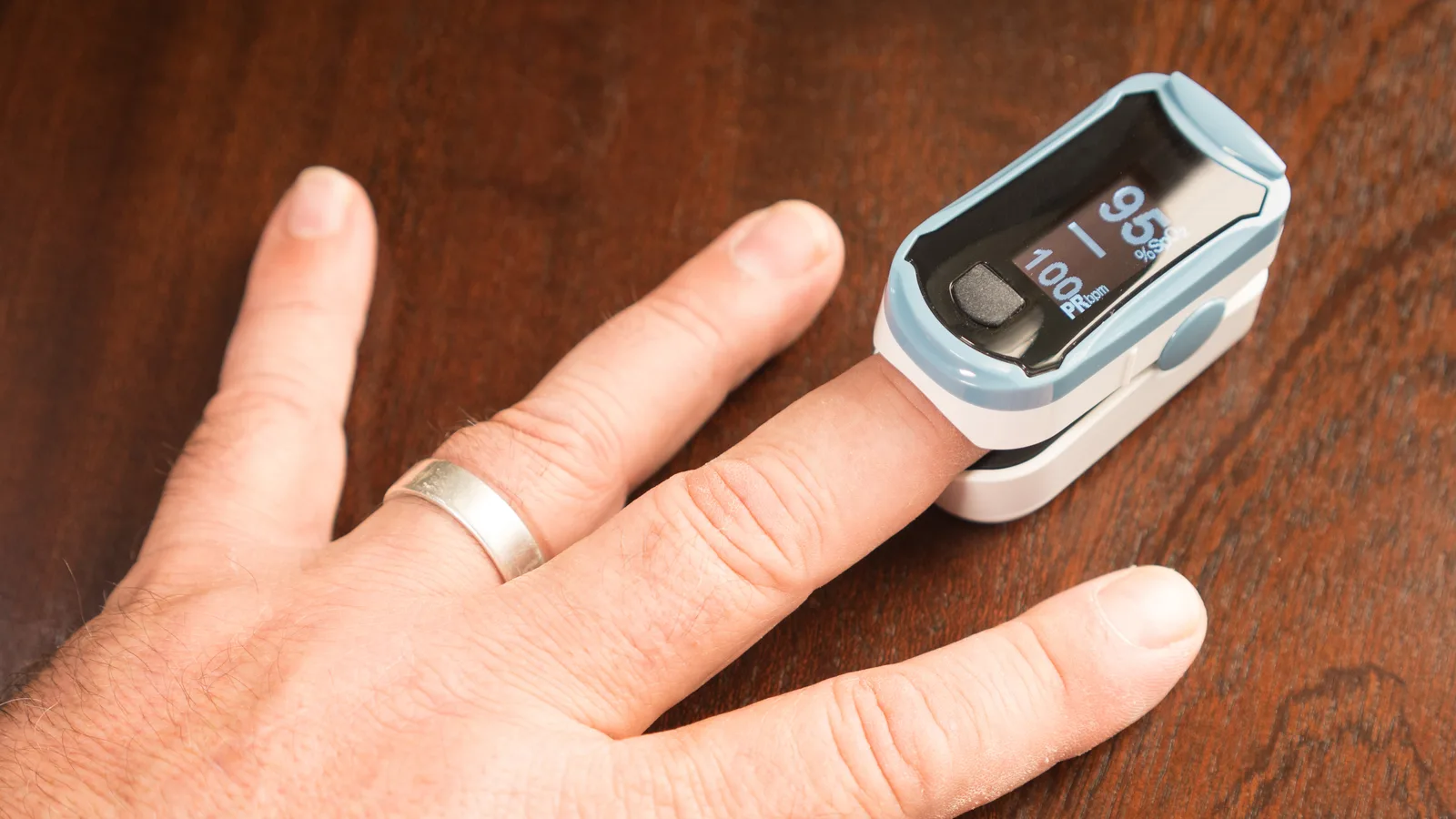
Many smartwatches and rings now show a blood oxygen percentage, and fingertip pulse oximeters sit in medicine cabinets across the country. The number looks precise. It is an estimate, and how much weight it can bear depends on the device, the person and the conditions when it was taken.
What the number is
The reading is called SpO2, an estimate of the percentage of hemoglobin in your blood that is carrying oxygen. A pulse oximeter shines red and near-infrared light through the skin to a detector. Blood rich in oxygen and blood low in oxygen absorb those two wavelengths differently, and the device calculates saturation from the difference, as the National Heart, Lung, and Blood Institute describes it. Apple says its watch uses a bright red light against the wrist and takes 15 seconds with the wrist flat and still.
What is normal
The FDA says oxygen saturation is between 95 and 100 percent for most healthy people. It can run somewhat lower in people with some lung or heart conditions and slightly lower at high altitude. MedlinePlus adds that a reading may be 2 to 4 percentage points higher or lower than the true level, and that oximeters are most accurate between 90 and 100 percent.
What throws it off
- Circulation and temperature. Poor blood flow and cold skin both reduce accuracy, per the FDA.
- Nail polish and artificial nails on a fingertip device, per the FDA and MedlinePlus.
- Movement. The FDA advises sitting still, keeping the hand warm, relaxed and below heart level, and waiting until the number stops changing.
- On a watch, Apple lists skin perfusion, tattoo ink, motion and a resting heart rate above 150 beats a minute as factors that can prevent a reading.
- Skin pigmentation. The NHLBI says melanin can skew readings upward in people with darker skin, which can hide low oxygen.
The skin tone problem, in numbers
A 2020 study in the New England Journal of Medicine compared oximeter readings with arterial blood tests in hospitalized patients. It counted hidden low oxygen, a true saturation below 88 percent while the oximeter read 92 to 96 percent. At the University of Michigan, that happened in 11.7 percent of readings in that 92 to 96 percent range for Black patients and 3.6 percent for white patients; across 178 hospitals the figures were 17.0 percent and 6.2 percent. In January 2025 the FDA issued draft guidance asking makers of medical oximeters to test across a wider range of skin tones and to label devices that perform comparably. That guidance is a draft and covers medical devices, not wellness gadgets.
Medical device or wellness feature
The FDA reviews prescription oximeters and a small number cleared for over-the-counter sale. Oximeters sold for general wellness or sports are not reviewed by the FDA before sale. Apple states that its Blood Oxygen readings are not intended for medical use and are designed only for general fitness and wellness.
When the number matters
MedlinePlus advises contacting a health care provider at 92 percent or lower and seeking immediate care at 88 percent or lower. The FDA gives no single cutoff, says not to rely on an oximeter alone, and lists warning signs that matter whatever the number says: a bluish face, lips or nails, worsening shortness of breath or cough, restlessness, chest pain or tightness, and a racing pulse. The FDA also notes that some people with low oxygen have few or no symptoms. If a reading looks low, warm your hands, sit still and measure again before drawing any conclusion, and treat symptoms as more important than the screen.
This article reports research and expert guidance. It is not medical advice. Talk to your clinician before changing medication, treatment or a medical diet.
Sources
- FDA: Pulse Oximeter Basics
- FDA: proposed recommendations on pulse oximeter performance across skin tones, January 2025
- National Heart, Lung, and Blood Institute: Updating pulse oximeters
- MedlinePlus: Pulse Oximetry
- MedlinePlus Magazine: Getting an accurate read on pulse oximeters
- New England Journal of Medicine: Racial Bias in Pulse Oximetry Measurement (Sjoding et al., 2020)
- Apple Support: How to use the Blood Oxygen app on Apple Watch
Loading comments…