












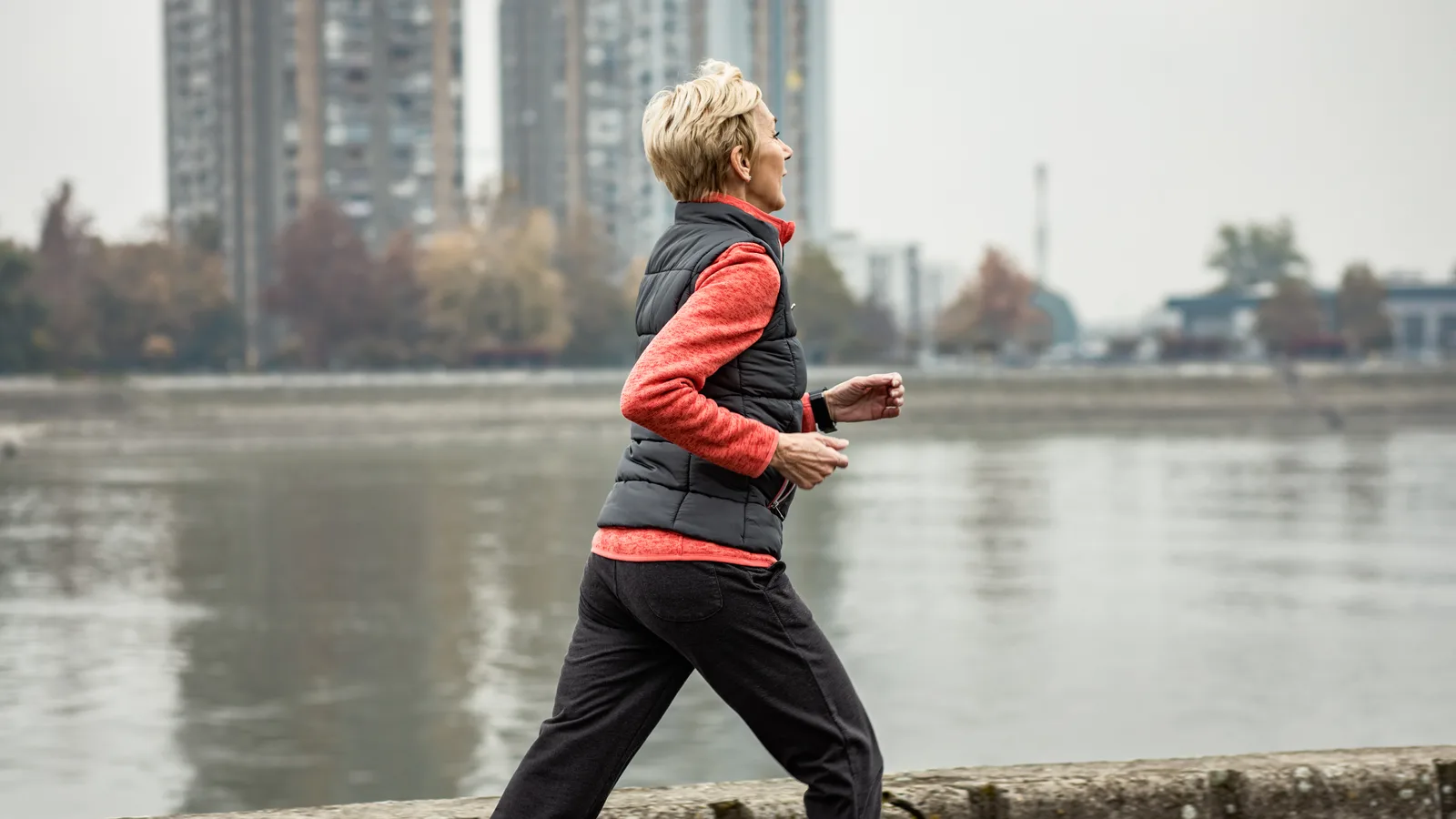
Weighted vests have become a common sight on neighborhood walks, often sold with the idea that the extra load helps keep bones strong. One of the more direct tests of that idea comes from Wake Forest University School of Medicine, where researchers asked a narrower question: when older adults lose weight on purpose, does putting the lost pounds back on in a vest stop the bone loss that usually comes with dieting?
The answer from the trial, called INVEST and published in JAMA Network Open in June 2025, was no. Resistance training did not stop it either. Here is what the trial did and what it found.
Why weight loss and bone loss travel together
Bone responds to the load it carries. When older adults lose a meaningful amount of weight, bone density at the hip tends to fall with it, and a lower hip density raises fracture risk. The trial's reasoning was mechanical: if part of the stimulus for bone is body weight, replacing the lost weight externally might keep that stimulus in place while fat comes off.
How the trial was set up
The team randomized 150 adults living with obesity, average age about 66 and about three quarters women, to one of three year-long programs between September 2019 and April 2024:
- Weight loss alone: a reduced-calorie diet aimed at losing 10 percent of body weight, with adequate calcium, vitamin D and protein.
- Weight loss plus a weighted vest: the same diet, with a vest worn 8 hours a day and loaded up over time to replace as much as all of the weight lost.
- Weight loss plus resistance training: the same diet, with supervised, progressive strength sessions three times a week.
The main measures were the change in hip bone density by CT scan and by DXA, the standard bone density scan. 133 of the 150 finished the year.
What happened
All three groups lost a similar amount of weight, between 9 and 11.2 percent. Vest wearers reported wearing the vest about 7.1 hours a day on average, with roughly 78 percent of the lost weight replaced in the vest. The lifting group made it to about 71 percent of its sessions.
Hip bone density fell in all three groups, by about 1.2 to 1.9 percent over the year on the CT measure. The vest group did not differ meaningfully from the diet-only group, and DXA readings of the hip told the same story. The vest group was judged no worse than the lifting group, which also did not prevent the loss. The authors concluded that exercise alone may not be enough to protect the hip during weight loss in this group and that other or additional strategies are needed.
What the trial does not show
This was one trial in older adults with obesity who were dieting. It does not test vests in people who are not losing weight, in younger adults, or with the jumping and impact work some earlier vest studies paired them with. It measured bone density, not fractures, over a single year.
The trial was funded by the National Institute on Aging and the National Center for Advancing Translational Sciences, both part of the National Institutes of Health, and the authors reported no conflicts of interest.
What this means for a reader thinking about a vest
A vest adds load to walking and standing, and walking remains good for health on its own terms. What the best trial so far does not support is the specific promise that a vest will hold bone density steady while you lose weight. Strength training kept its other benefits in this trial, such as muscle and function, but did not change the hip bone result either.
If you are losing weight later in life, and especially if you have been told your bone density is low, the question to bring to a clinician is how to protect your bones during the loss, which may include a bone density scan and a look at calcium, vitamin D and protein.
This article reports research and expert guidance. It is not medical advice. Talk to your clinician before changing medication, treatment or a medical diet.
Loading comments…