












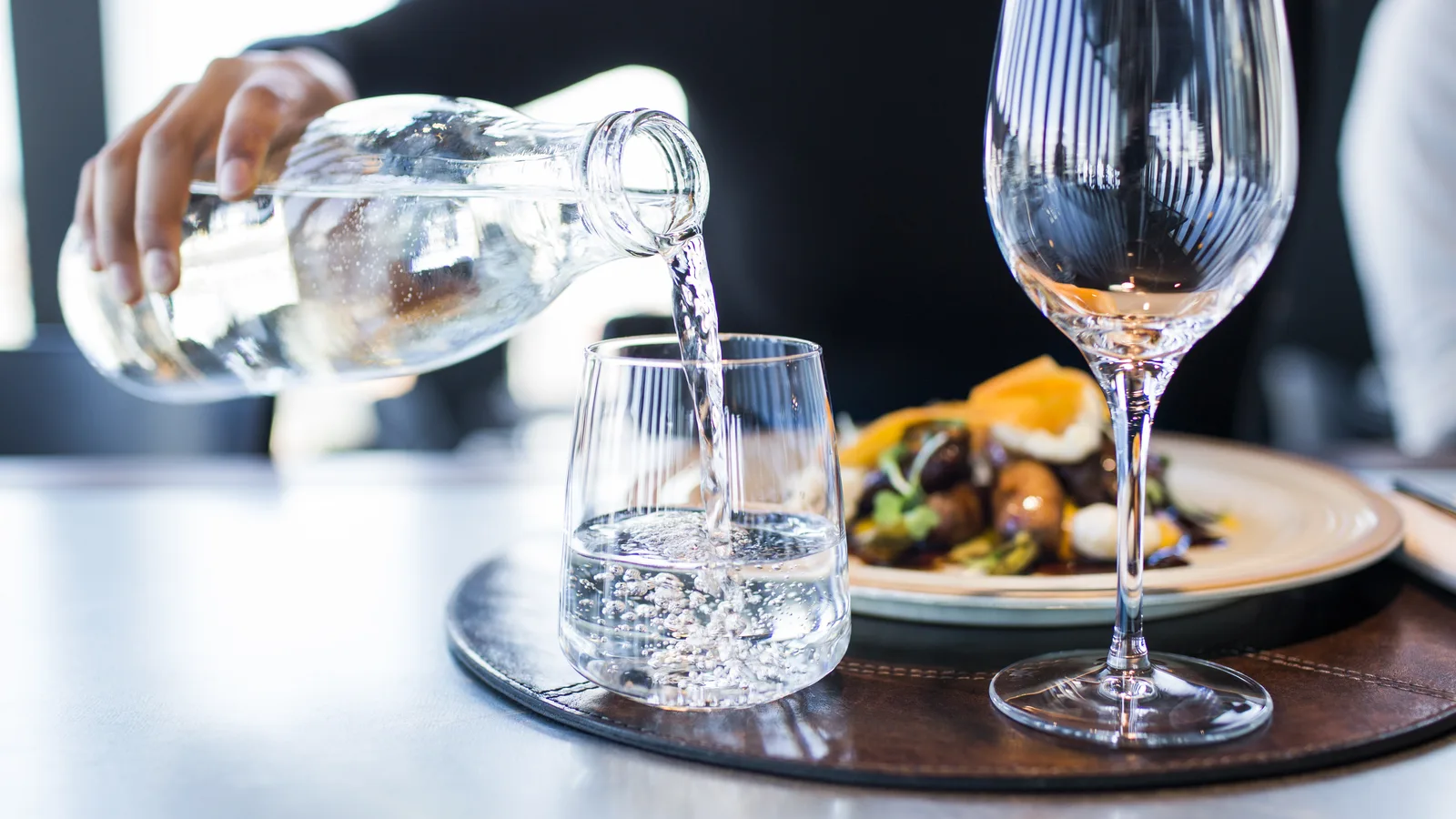
Drinking a glass of water before a meal is one of the most repeated pieces of weight advice, and one of the few that has been put to a randomized test. The trial most often cited behind it was small and specific, and both of those details matter for what it can tell a reader.
The trial
Researchers at Virginia Tech published the study in the journal Obesity in 2010, with funding from the National Institute of Diabetes and Digestive and Kidney Diseases. They enrolled 48 adults aged 55 to 75 with a body mass index of 25 to 40, meaning overweight or obesity. Everyone followed the same reduced-calorie diet for 12 weeks. Half were also told to drink 500 milliliters of water, about two cups or 17 ounces, before each of their three daily meals. The other half followed the diet alone. Weight was measured every week.
What happened
The water group lost about 2 kilograms (about 4.4 pounds) more than the diet-only group over the 12 weeks. Measured as the rate of weight loss, their decline was about 44 percent steeper.
The researchers also ran test meals in the lab, letting people eat as much as they wanted with and without the water first. At the start of the study, drinking the water beforehand cut that meal by about 43 calories, from about 541 to 498. After 12 weeks of the routine the gap had narrowed to about 26 calories and was no longer statistically clear, which suggests part of the effect may fade as the body gets used to it.
Why it might work
The simplest explanation is volume: water takes up room in the stomach, which can bring on fullness sooner. The same group's earlier work had found that a water preload reduced meal intake in middle-aged and older adults, which is why this trial focused on that age group.
What it does not show
It was 48 people, all aged 55 to 75, all on a supervised reduced-calorie diet, followed for 12 weeks. Participants knew which group they were in, which cannot be avoided with water but can change behavior. The result says water helped people who were already dieting lose a little more; it does not show that water before meals produces weight loss without the diet, or that the effect holds in younger adults or over longer periods.
Who should check first
For most healthy adults, extra water is low risk. People told to limit fluids, including some with heart failure or advanced kidney disease, and anyone taking medicines that affect fluid balance, should ask their clinician before adding six cups of water a day around meals.
This article reports research and expert guidance. It is not medical advice. Talk to your clinician before changing medication, treatment or a medical diet.
Loading comments…