












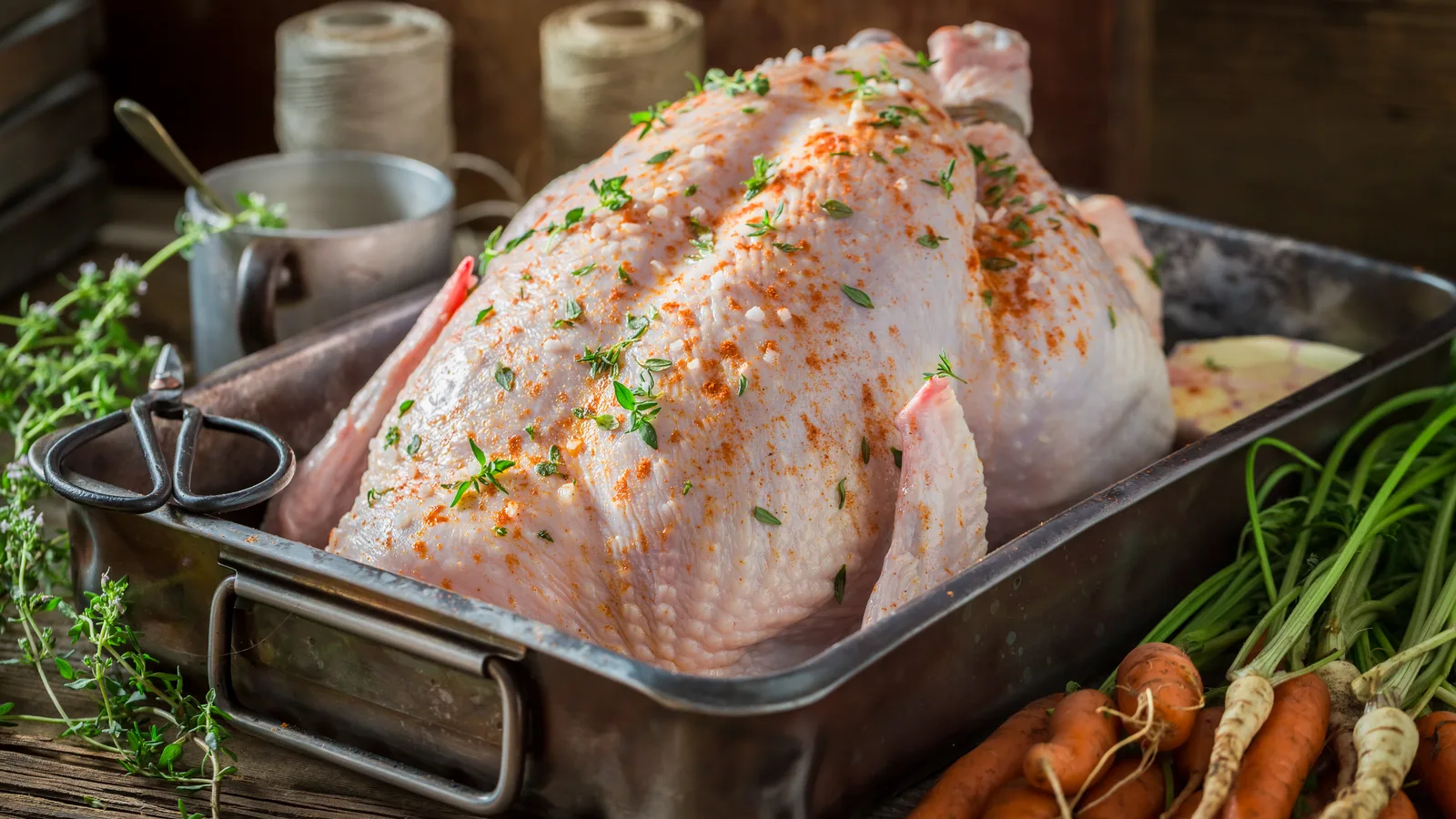
Rinsing a raw turkey under the tap is a habit many cooks learned from a parent, and Thanksgiving week is when it happens most. The U.S. Department of Agriculture tested what that rinse actually does in a real kitchen, and its advice is to skip it.
How the study worked
The USDA's Food Safety and Inspection Service ran an observational study of 300 people cooking in test kitchens, published in 2019. Participants cooked chicken thighs that had been inoculated with a harmless, traceable strain of E. coli and prepared a salad in the same session, the way a home cook would get a meal on the table. Researchers then swabbed sinks, surfaces and the salad lettuce to see where the tracer bacteria had traveled.
What it found
Among participants who washed or rinsed their raw poultry, 60 percent had the tracer bacteria in the sink afterward. Fourteen percent still had bacteria in the sink after they had tried to clean it. Twenty-six percent of the people who washed their poultry transferred bacteria from it onto their ready-to-eat salad lettuce.
Skipping the rinse did not make a kitchen clean on its own. Among participants who did not wash their poultry, 31 percent still got bacteria from it onto the lettuce. The USDA attributed that to ineffective handwashing and to sinks and utensils that were already contaminated. In other words, the rinse adds a splash zone, but hands, cutting boards and the order of tasks matter just as much.
What rinsing does not do
The USDA says washing, rinsing or brining raw meat and poultry in salt water, vinegar or lemon juice does not destroy bacteria. Only cooking to a safe internal temperature does. If there is something on the bird you want to remove, the agency suggests patting that spot with a damp paper towel and washing your hands right away.
The steps the USDA recommends instead
Make the uncooked food first. Prepare salads, cut vegetables and anything else that will not be cooked before you handle raw meat or poultry. That single change in order lowers the chance of the two meeting.
Clean, then sanitize. Wash sinks and countertops with hot, soapy water, then apply a sanitizer to any surface that touched raw poultry or its juices.
Wash hands properly and immediately. Wet your hands, lather with soap and scrub for 20 seconds right after handling raw meat or poultry. The USDA's food safety officials called skipping that step just as dangerous as rinsing the bird.
Cook by thermometer, not by color. Poultry, whole or ground, is safe at 165 degrees Fahrenheit measured with a food thermometer. Ground meats are safe at 160 degrees, and whole cuts of beef, pork, lamb and veal at 145 degrees. For a turkey, check the thickest part of the breast, the innermost part of the thigh and the innermost part of the wing.
Why the holiday raises the stakes
A Thanksgiving kitchen is the study's setup at scale: one raw bird, several side dishes, a salad, and more hands than usual. The Centers for Disease Control and Prevention estimates that foodborne illness leads to roughly 128,000 hospitalizations and 3,000 deaths in the United States each year, and the USDA notes that children, older adults and people with weakened immune systems are most at risk.
If you have a question while cooking, the USDA Meat and Poultry Hotline answers at 1-888-674-6854.
Loading comments…