












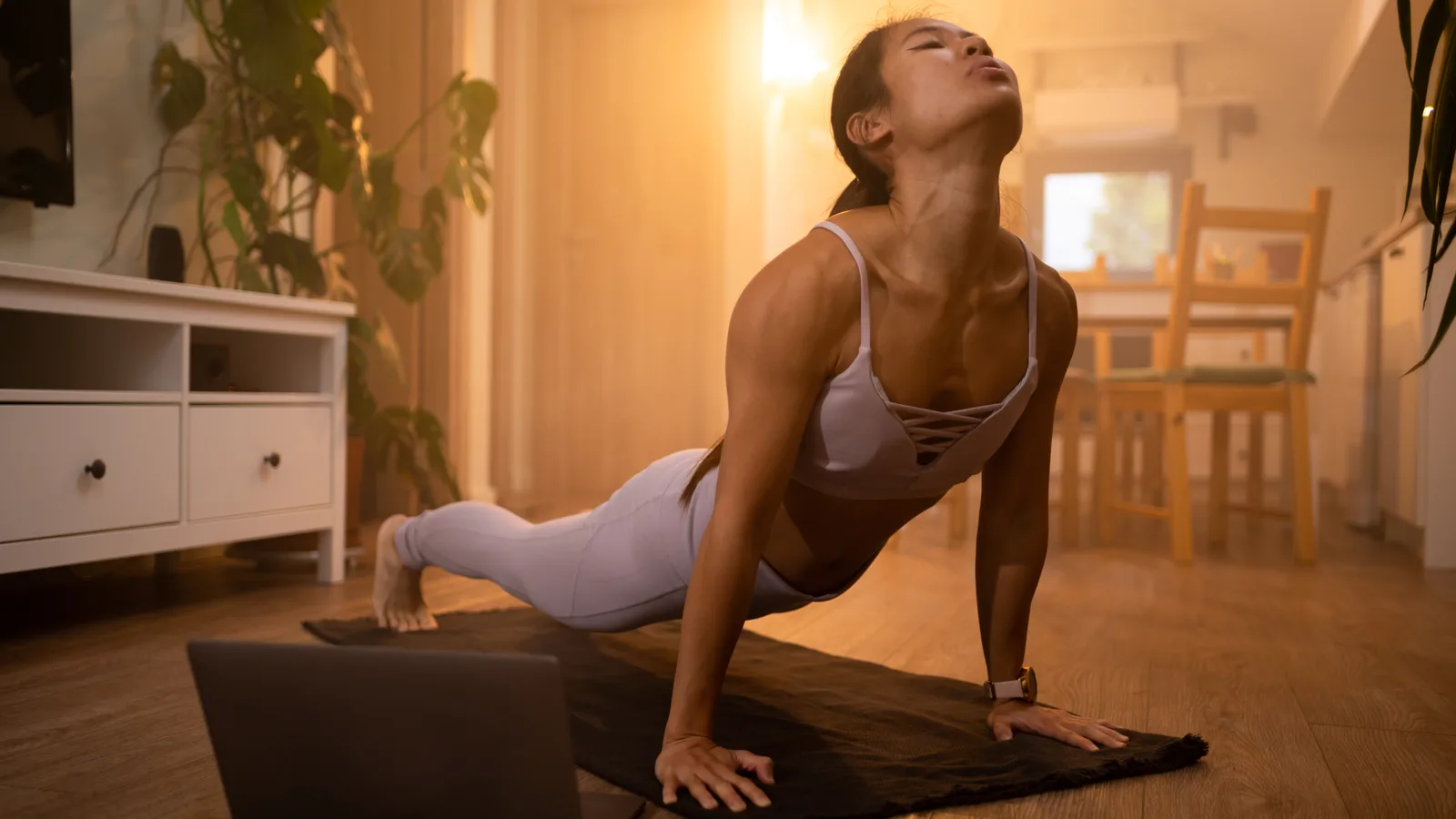
Vinyasa yoga, the flowing style that links poses with the breath, can push the heart rate into the moderate range, which is part of why researchers wondered whether it might help people who sleep badly. A small trial from the University of Pittsburgh and the University of Central Florida tested a month of it at home. Across everyone, sleep did not improve more than in a comparison group. Among the people who actually did the sessions, insomnia symptoms did.
The study
The trial was published in Sleep Advances, a journal of the Sleep Research Society, in October 2026. It was a pilot randomized trial, the kind run to test whether a larger study is worth doing, and the authors label it that way.
Thirty-three adults took part. They were not regularly active, and all had insomnia symptoms, with a score of 10 or more on the Insomnia Severity Index (the scale runs to 28; 15 and above is usually read as moderate insomnia). About 85 percent were women, and the average age was 35.
- Yoga group (17 people): three 60-minute pre-recorded vinyasa classes a week for four weeks, done at home.
- Control group (16 people): kept their usual routine.
Sleep was measured three ways: the insomnia questionnaire, a wrist activity monitor and a sleep diary. The team also measured resting blood pressure and heart rate, and heart rate variability during the day and over one night using a chest strap.
What it found
- Sleep, everyone included: changes in the insomnia score, the wrist monitor data and the diary did not differ significantly between the groups.
- Sleep, regular practicers: among participants who completed most of their sessions, insomnia scores fell more in the yoga group than in the control group.
- Resting heart rate: it dropped from about 72.4 to 69.5 beats per minute in the yoga group and rose from about 70.5 to 72.9 in the control group, a difference that just reached statistical significance.
- Overnight heart measures and blood pressure: no meaningful change.
What it does not show
With 17 people doing yoga for four weeks, the trial was too small to settle anything, and it was not designed to. The finding about regular practicers compares a subgroup chosen by how much they practiced, and people who keep up a routine may differ in other ways that also affect sleep. The control group did no activity at all, so the trial cannot separate yoga from simply exercising more. The abstract does not name a funder.
For context, the American Academy of Sleep Medicine's 2021 guideline on behavioral treatments for chronic insomnia in adults gives its strong recommendation to cognitive behavioral therapy for insomnia (CBT-I). Yoga is not among the treatments it recommends.
If you want to try it
The trial's routine is easy to copy: three hour-long vinyasa classes a week, at home. The practical lesson from its own results is that the benefit showed up in people who did the classes, not in people who signed up for them. Insomnia that has lasted three months or more, or comes with loud snoring or daytime sleepiness, is worth raising with a clinician, who can check for sleep apnea and refer for CBT-I.
This article reports research and expert guidance. It is not medical advice. Talk to your clinician before changing medication, treatment or a medical diet.
Sources
- Sleep Advances: Effects of a 4-week vinyasa yoga intervention on sleep and cardiovascular health in adults with insomnia symptoms: a pilot randomized controlled trial (2026)
- PubMed record and abstract, PMID 42999866
- Journal of Clinical Sleep Medicine: Behavioral and psychological treatments for chronic insomnia disorder in adults, an American Academy of Sleep Medicine clinical practice guideline (2021)
Loading comments…