












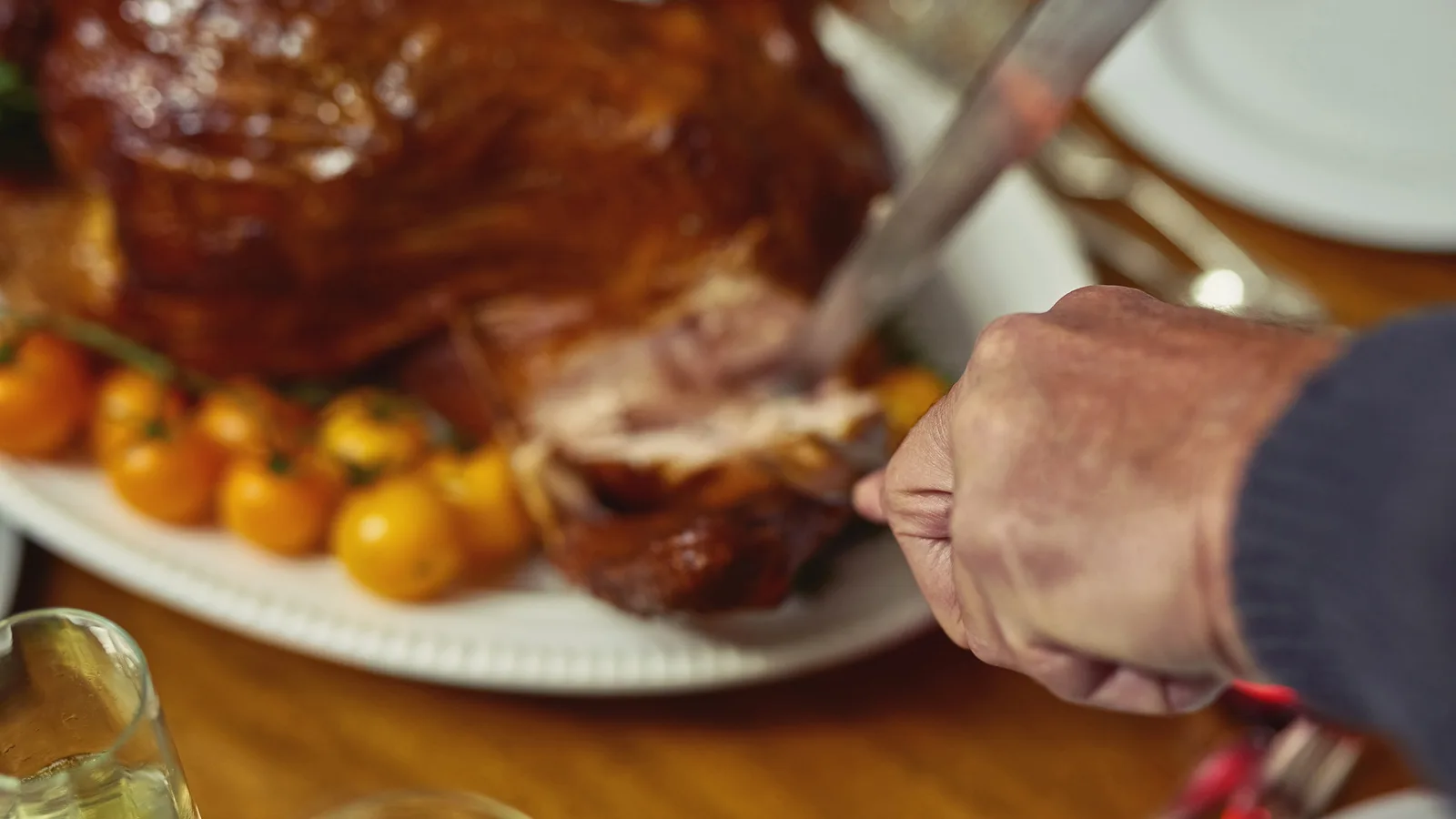
Turkey is the protein most American tables will share this week, and the question at the carving board is usually white or dark. The U.S. Department of Agriculture's FoodData Central database, the reference the government's own nutrition tools use, has laboratory values for each part of a roasted whole turkey. The gap in protein turns out to be small. The skin is what moves the other numbers.
The numbers, per 3-ounce serving
Three ounces (85 grams) of cooked meat is about the size of a deck of cards. Calculated from the USDA's per-100-gram values for a whole roasted turkey:
- Breast, meat only: about 25.6 grams of protein, 125 calories, 1.8 grams of fat, 0.5 grams of saturated fat.
- Light meat with skin: about 25.2 grams of protein, 150 calories, 4.7 grams of fat, 1.4 grams of saturated fat.
- Dark meat only: about 23.5 grams of protein, 147 calories, 5.1 grams of fat, 1.5 grams of saturated fat.
- Dark meat with skin: about 23.2 grams of protein, 176 calories, 8.5 grams of fat, 2.5 grams of saturated fat.
What the comparison shows
Breast meat carries about 2 grams more protein per serving than dark meat, roughly 9 percent more. Dark meat without skin and breast meat with skin land within a few calories of each other. The biggest single change on the plate is the skin: on dark meat it adds about 3.4 grams of fat and 30 calories a serving. For a reader tracking saturated fat, dark meat with skin has about five times the saturated fat of skinless breast.
How it fits a day
The Recommended Dietary Allowance for protein is 0.8 grams per kilogram of body weight a day, about 54 grams for a 150 pound adult. A single 3-ounce serving of either cut covers more than 40 percent of that. Guidance for older adults and people who lift often sets a higher target, and even then a holiday plate with a serving of turkey is rarely short on protein.
One practical note: the values above are for a whole roasted bird with nothing added. Turkeys sold pre-basted or with added solution carry sodium from that solution, and the USDA lists them as separate foods with different numbers; the package label shows which kind you bought.
Sources
- USDA FoodData Central: Turkey, whole, breast, meat only, cooked, roasted
- USDA FoodData Central: Turkey, whole, light meat, meat and skin, cooked, roasted
- USDA FoodData Central: Turkey, whole, dark meat, cooked, roasted
- USDA FoodData Central: Turkey, whole, dark meat, meat and skin, cooked, roasted
- USDA National Agricultural Library: Dietary Reference Intakes
Loading comments…