












A Thanksgiving dinner turns into a week of lunches in a lot of kitchens, and the USDA's Food Safety and Inspection Service has a short set of numbers that decide how long that week can safely run. They are the same rules that apply to any batch of meal prep, applied to a much bigger bird and a much longer table.
The two-hour clock starts when the food comes out
Bacteria grow fastest between 40 and 140 degrees Fahrenheit. The USDA says perishable food should be refrigerated within two hours of cooking or of coming off a warmer, and anything left at room temperature longer than that should be thrown out. In a room above 90 degrees, the limit drops to one hour. At a long holiday meal, the clock often runs out while people are still at the table, so it helps to put food away before dessert rather than after the dishes.
Cut the turkey down before it goes in the fridge
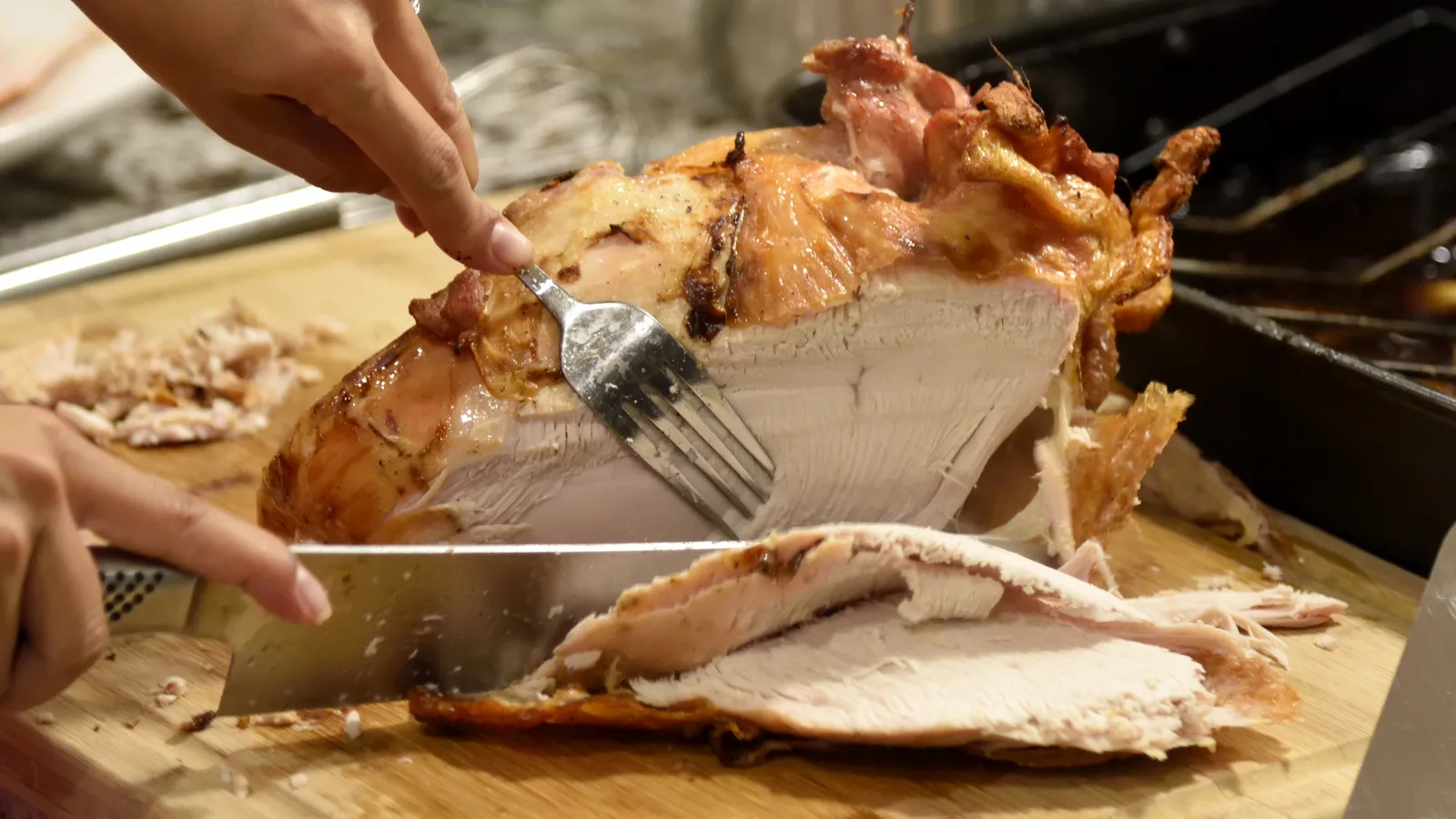
A whole bird cools too slowly. The USDA's guidance is to cut the turkey into smaller pieces: slice the breast meat, while legs and wings can stay whole. Large amounts of stuffing, mashed potatoes or soup go into shallow containers so they reach 40 degrees quickly. Hot food can go straight into the refrigerator, or into an ice or cold water bath first. Wrapping leftovers well or sealing them in containers keeps moisture in and keeps other foods' odors out.
Three to four days, or the freezer
Refrigerated leftovers keep for three to four days, which puts the end of a Thursday dinner at Sunday or Monday. Anything that will not be eaten by then should be frozen within that window. Frozen leftovers stay safe indefinitely, though the USDA says they taste best within three to four months, after which they can dry out and lose flavor.
Reheat to 165, and boil the gravy
Reheated leftovers should reach 165 degrees, checked with a food thermometer. Gravy, sauces and soups should come to a rolling boil. Covering food while it reheats holds in moisture and helps it heat all the way through. Microwaves leave cold spots, so stir or rotate the food, let it rest, and check the temperature in more than one place.
Thawing what was frozen
The refrigerator is the slowest and safest way to thaw frozen leftovers, and food thawed there can be used within three to four days or frozen again. Cold-water thawing is faster but needs a leak-proof bag, and food thawed that way should be cooked before refreezing. Microwave-thawed leftovers should be heated straight through to 165 degrees. Frozen leftovers can also be reheated without thawing, in a saucepan, oven or microwave; it simply takes longer.
When in doubt
The USDA Meat and Poultry Hotline at 1-888-674-6854 (1-888-MPHOTLINE) answers questions about meat, poultry and egg products. A container whose age nobody remembers is the one to throw out.
Loading comments…