






The American College of Sports Medicine's numbers for flexibility are specific: stretch each major muscle group at least two to three days a week, hold each static stretch for 10 to 30 seconds (30 to 60 seconds for older adults), repeat it two to four times, and aim for about 60 seconds of total stretching per muscle group. Daily stretching produces larger gains. Those figures come from the college's position stand on exercise quantity and quality, published in Medicine and Science in Sports and Exercise, and they make a ten-minute mobility session easy to build.
What the guidance says, and why it is a separate category
The ACSM position stand treats flexibility as its own component of fitness, alongside aerobic, resistance and neuromotor work such as balance and agility. Its recommendations: stretch to the point of mild tightness or slight discomfort, not pain; stretch when the muscles are warm, after light aerobic activity or a hot shower; and use any of static stretching (holding still), dynamic stretching (controlled movement through a range), ballistic stretching or partner-assisted contract-relax methods. For the contract-relax method, the stand describes a 3 to 6 second contraction at light to moderate effort, followed by a 10 to 30 second assisted stretch.
The federal Physical Activity Guidelines for Americans do not count stretching toward the weekly aerobic or muscle-strengthening totals, but they do not discourage it either: the guidelines note that flexibility work is appropriate and can help people stay able to do the activities they enjoy. For older adults the guidelines add balance training to the weekly mix.
Stretching before a workout: what the review found
The common question is whether holding long stretches right before exercise hurts performance. A systematic review in Applied Physiology, Nutrition, and Metabolism (2016) pooled the trials and found that static stretching measured immediately afterward lowered performance by about 1 percent when each muscle was stretched for under 60 seconds in total, and by about 4.6 percent at 60 seconds or more. When the stretching was followed by dynamic warm-up activity, as it usually is in real life, no clear performance effect showed up. Dynamic stretching produced small improvements when done within minutes of the activity.
The same review found no clear effect of static or contract-relax stretching on overall or overuse injuries, and range-of-motion gains from a single session typically faded within 30 minutes. In short, a warm-up stretch helps range of motion for the session ahead; the lasting change comes from doing it on most days.
A ten-minute session built on those numbers
Do it after a five-minute walk or at the end of a workout, when the muscles are warm. Hold each stretch for 30 seconds and do two rounds per side, which lands on the 60-second target per muscle group:
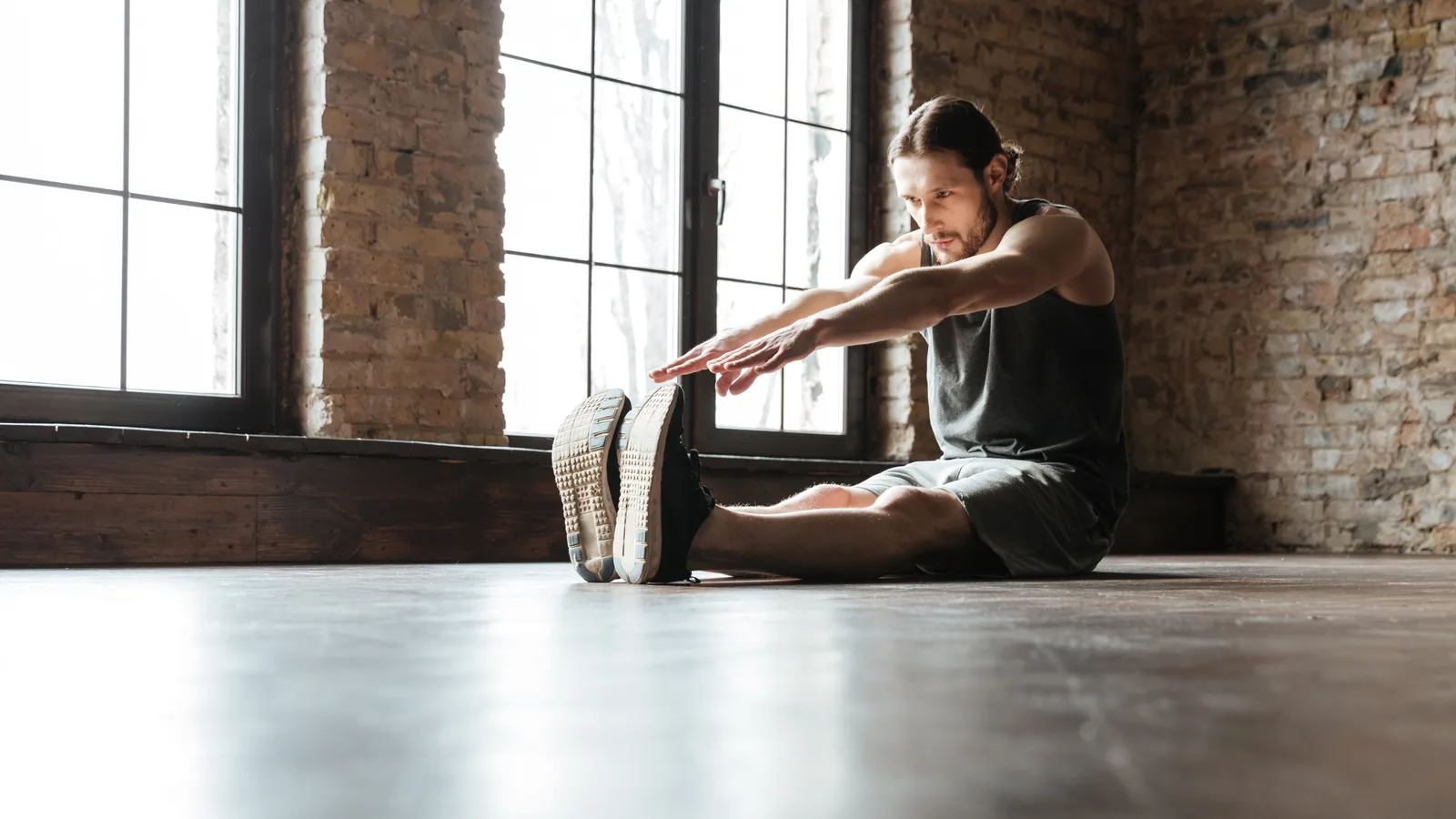
- Seated hamstring reach: sit with legs straight, hinge forward from the hips toward the toes until the backs of the legs feel tight.
- Half-kneeling hip flexor stretch: one knee down, shift the hips forward until the front of the hip on the kneeling side stretches.
- Standing calf stretch: hands on a wall, back heel pressed down, back knee straight.
- Figure-four glute stretch: on your back, one ankle crossed over the opposite knee, pull the bottom leg toward the chest.
- Doorway chest stretch: forearm on a door frame at shoulder height, turn the body away.
- Thread-the-needle for the upper back: on hands and knees, slide one arm under the body and let the shoulder drop.
For a warm-up before running or lifting, swap the long holds for 30 to 60 seconds of dynamic movement per area instead: leg swings, walking lunges with a reach, arm circles, hip circles. Older adults working toward the guidelines can use the longer 30 to 60 second holds and add a balance drill, such as standing on one foot beside a counter.
What it does not cover
The ACSM figures are recommendations built from the body of evidence, not the result of one trial, and the review's performance numbers come mostly from short lab tests in young, healthy, active adults. Neither addresses rehabilitation after an injury or surgery, which follows a clinician's or physical therapist's plan.
This article reports research and expert guidance. It is not medical advice. Talk to your clinician before changing medication, treatment or a medical diet.
Sources
- Medicine and Science in Sports and Exercise: American College of Sports Medicine position stand, Quantity and quality of exercise for developing and maintaining cardiorespiratory, musculoskeletal, and neuromotor fitness in apparently healthy adults
- Applied Physiology, Nutrition, and Metabolism: Acute effects of muscle stretching on physical performance, range of motion, and injury incidence in healthy active individuals: a systematic review
- HHS: Physical Activity Guidelines for Americans, 2nd edition
Loading comments…