












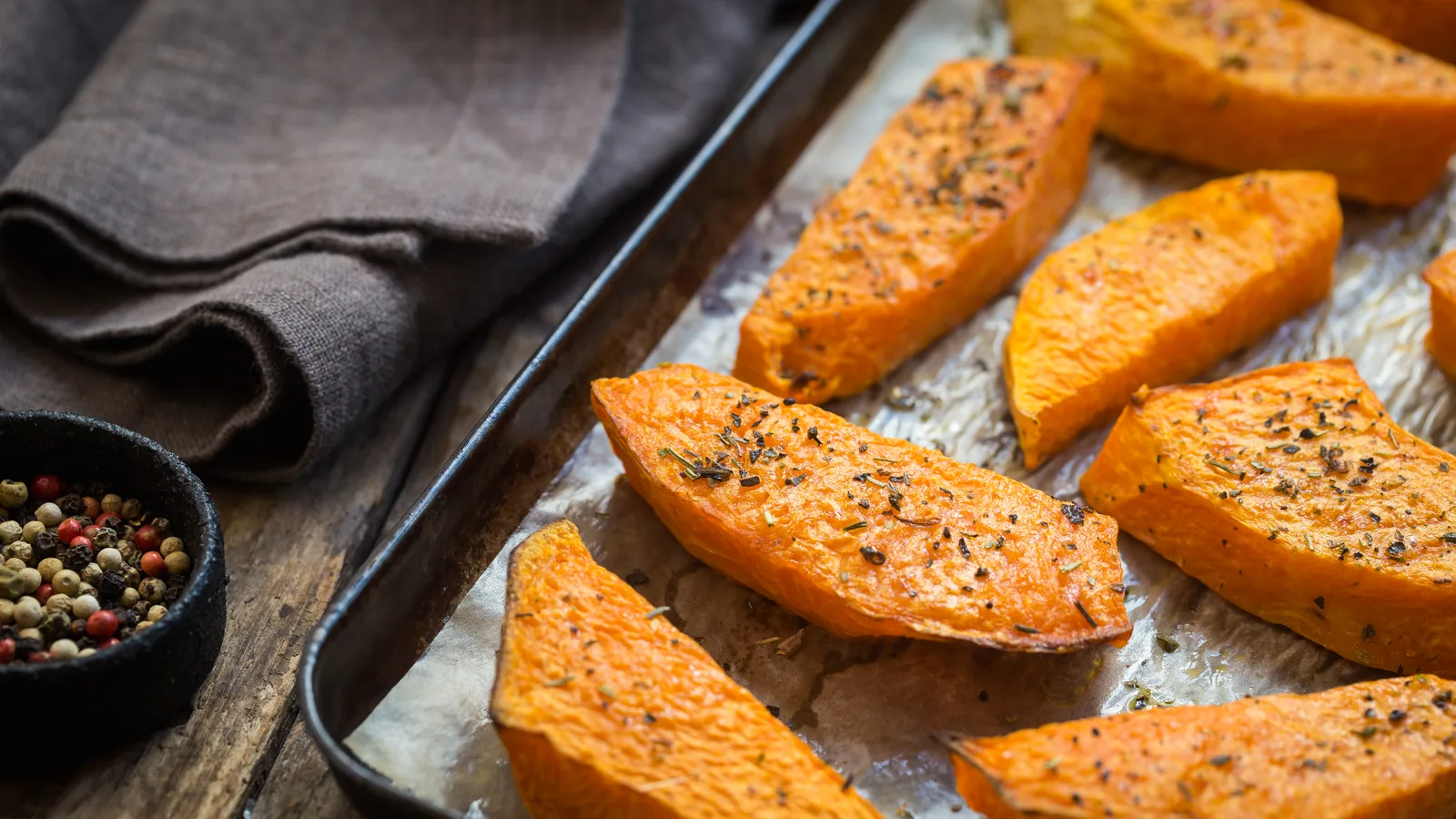
Sweet potatoes have a reputation as the healthier potato, and they show up on the holiday table under marshmallows as often as they show up in meal prep. The USDA's FoodData Central database, the federal reference for what is in food, lets the two be compared gram for gram. The result is closer than the reputation suggests, and each one comes out ahead on different nutrients.
The comparison
These figures are per 100 grams, about 3.5 ounces, for a sweet potato baked in its skin (flesh only) and a white potato baked and eaten with the skin, both cooked without salt:
- Calories: sweet potato 90, white potato 93.
- Carbohydrate: 20.7 grams against 21.2.
- Sugars: 6.5 grams against 1.2. The sweet potato's sweetness is real sugar.
- Fiber: 3.3 grams against 2.2.
- Protein: 2.0 grams against 2.5.
- Vitamin A: 961 micrograms against 1.
- Vitamin C: 19.6 milligrams against 9.6.
- Potassium: 475 milligrams against 535.
Where the sweet potato stands out: vitamin A
The gap in vitamin A is the biggest difference between the two. The orange color comes from beta-carotene, which the body converts to vitamin A. The National Institutes of Health Office of Dietary Supplements sets the daily recommendation for adults at 900 micrograms for men and 700 for women, so 100 grams of baked sweet potato covers more than a full day for either. The same office notes that beta-carotene from food does not carry the toxicity risk of preformed vitamin A from supplements, because the body converts only what it needs.
Sweet potatoes also have about twice the vitamin C and a third more fiber. The fiber matters on a typical American plate: the Dietary Guidelines for Americans set about 14 grams of fiber for every 1,000 calories, and most people fall short.
Where the white potato stands out: potassium and protein
White potatoes, eaten with the skin, carry more potassium, a nutrient the Dietary Guidelines name as one Americans underconsume. The National Academies set adequate intakes of 3,400 milligrams a day for men and 2,600 for women. They also have slightly more protein and far less sugar.
What changes the numbers more than the potato
The preparation. These figures are for plain baked potatoes. Frying, or adding butter, brown sugar, marshmallows or cheese, changes calories, fat, sugar and sodium far more than the choice of potato does. Eating the skin of a white potato keeps more of its fiber. Comparing the two plain also shows why neither belongs in a bad-food category: both are vegetables with real nutrients, and the federal guidelines count both toward vegetable intake.
How to look it up yourself
Every figure here is free to check on FoodData Central. Search for the food, choose the entry that matches how it was cooked, and the full nutrient list appears per 100 grams, with common portion sizes listed below it.
Loading comments…