












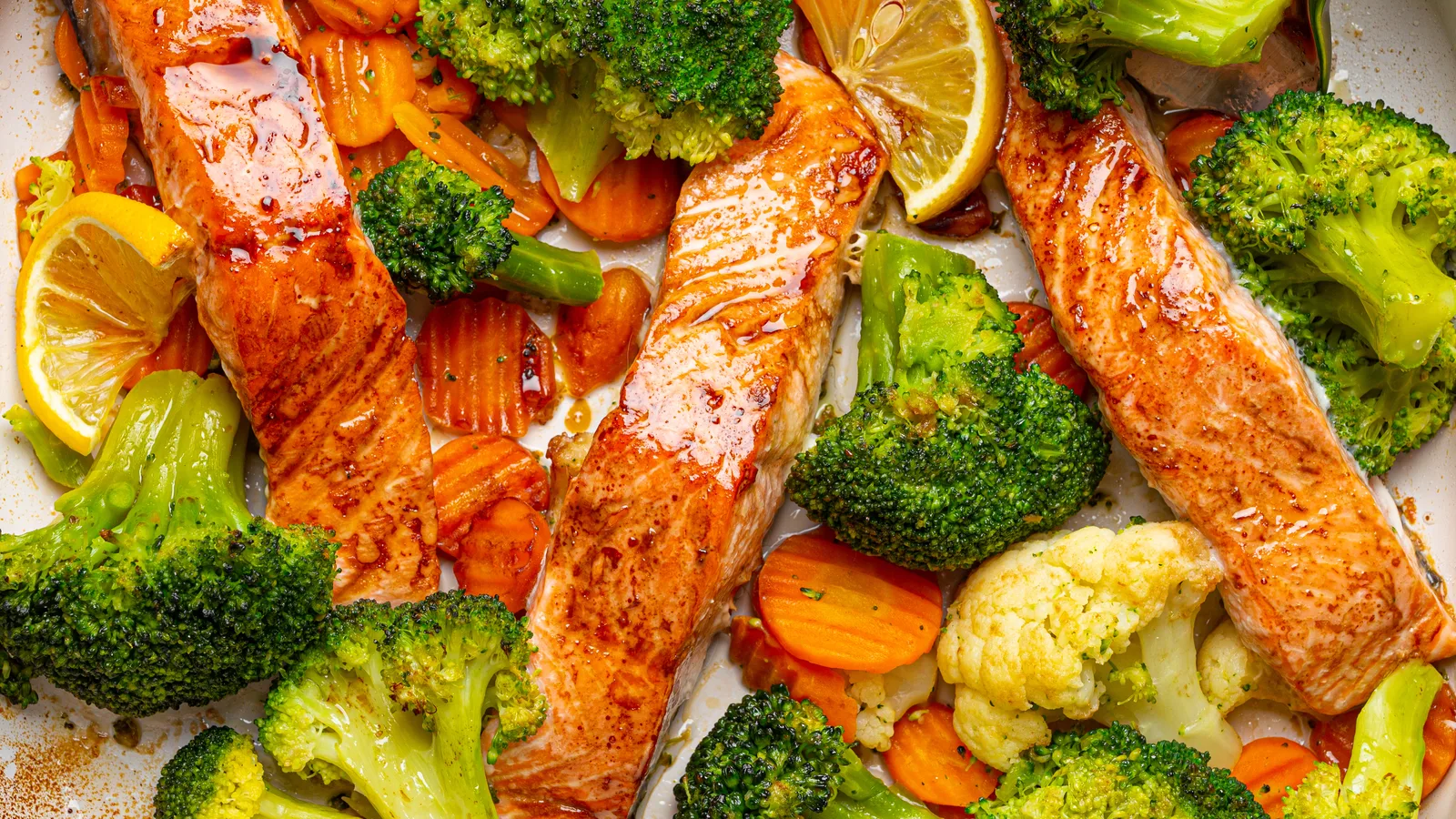
This is a weeknight dinner that does most of its work in the oven: vegetables go in first, salmon joins them for the last stretch, and one pan comes out. It serves four, lands at roughly 40 grams of protein a plate, and covers one of the two weekly servings of fish the American Heart Association recommends.
Ingredients (4 servings)
- 4 salmon fillets, about 6 ounces each (1.5 pounds total)
- 1 large head broccoli, cut into florets (about 1 pound)
- 2 cups cauliflower florets
- 4 medium carrots, sliced into coins about a quarter inch thick
- 2 tablespoons olive oil, divided
- 1 lemon, half sliced into rounds and half for juice
- 2 cloves garlic, minced
- 1 teaspoon smoked paprika
- Salt and black pepper
Method
- Heat the oven to 425°F. Line a large rimmed sheet pan or a wide roasting dish.
- Toss the carrots, broccoli and cauliflower with 1 tablespoon of the oil, a pinch of salt and pepper. Spread them out in one layer and roast for 12 minutes. Carrots go in at the same time because they take longest; cut them thin so they finish with everything else.
- Meanwhile, pat the salmon dry. Mix the remaining tablespoon of oil with the garlic, paprika, a squeeze of lemon, salt and pepper, and brush it over the fillets.
- Push the vegetables aside, set the salmon in the middle, tuck the lemon rounds around it and roast for 10 to 14 minutes, depending on thickness.
- The salmon is done when it flakes easily and reaches 145°F in the thickest part, the safe minimum temperature for fish on the federal food safety chart.
Per serving
Using USDA FoodData Central values for farmed Atlantic salmon and the raw vegetables, one plate comes to roughly:
- About 490 calories
- About 40 grams of protein
- About 30 grams of fat, most of it from the salmon and olive oil
- About 16 grams of carbohydrate, with about 5 to 6 grams of fiber
Wild salmon is leaner: swapping it in brings the plate closer to 380 calories with a similar amount of protein. Figures are estimates and shift with fillet size.
Making it fit the day
On a hard training day, add a cup of cooked brown rice or a roasted potato per plate. That adds roughly 200 to 250 calories, most of it carbohydrate, which is the fuel the sports nutrition position statements tie to heavier training.
On a rest day, the plate works as written.
For meal prep, cooked salmon and vegetables keep 3 to 4 days in the refrigerator in a sealed container. Reheat gently, or eat the salmon cold over greens.
Why salmon
Salmon is one of the richer sources of the omega-3 fats EPA and DHA, which is the main reason heart groups favor fatty fish. The American Heart Association suggests two servings of fish a week, each about 3.5 ounces cooked, and the Dietary Guidelines for Americans suggest about 8 ounces of seafood a week for most adults.
Sources
- U.S. Department of Agriculture: FoodData Central (salmon, Atlantic, farmed and wild; broccoli; carrots; cauliflower; olive oil)
- FoodSafety.gov: Safe Minimum Internal Temperatures
- American Heart Association: Fish and Omega-3 Fatty Acids
- U.S. Departments of Agriculture and Health and Human Services: Dietary Guidelines for Americans
- Medicine & Science in Sports & Exercise (2016): Nutrition and Athletic Performance, joint position statement
Loading comments…