












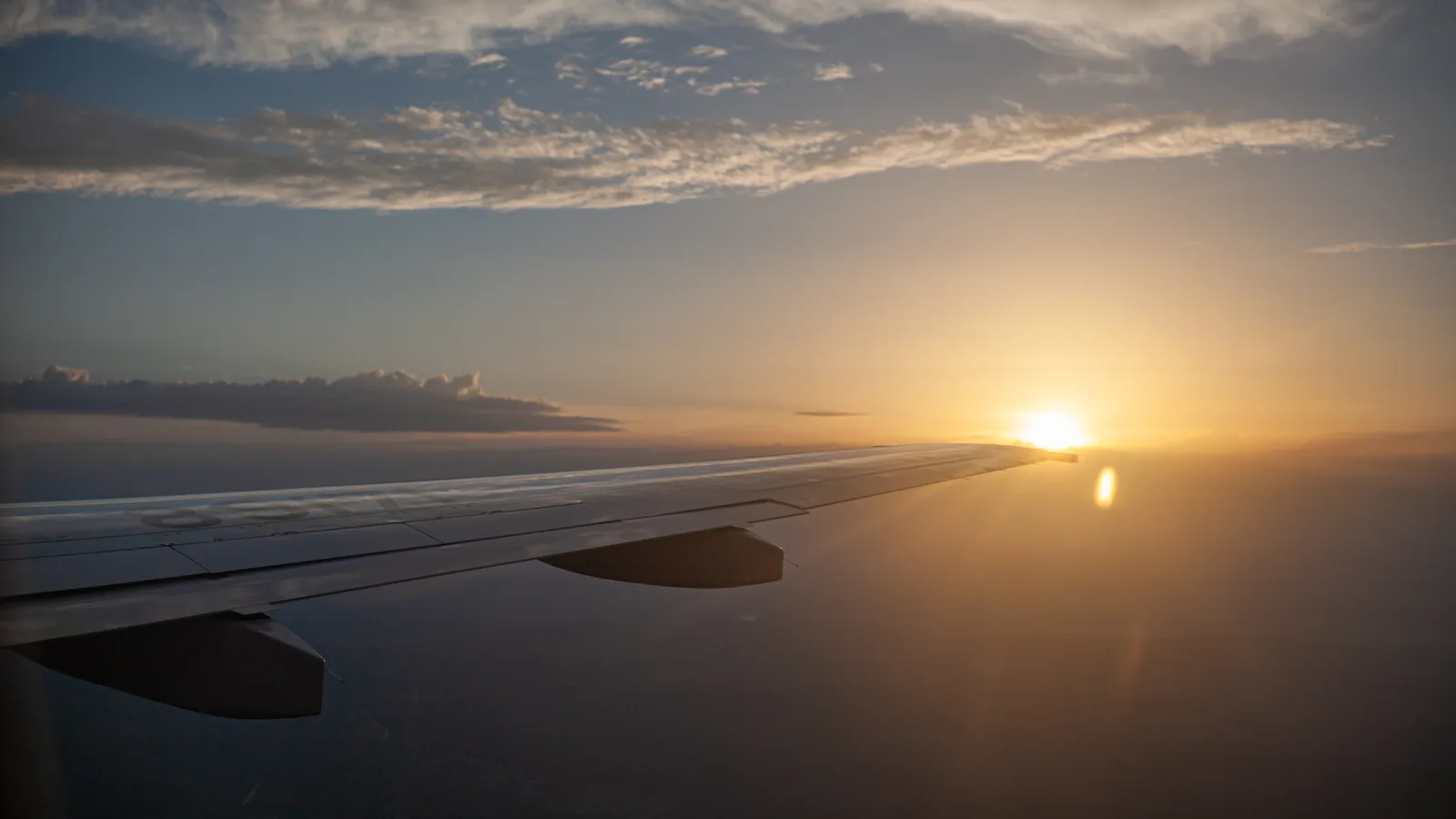
Oura began rolling out a feature on November 17 that turns a flight itinerary into a day-by-day schedule for shifting the body clock: when to get bright light, when to stay out of it, when to stop drinking coffee and when to start winding down. The company calls it Jet Lag Plan, and it arrives nine days before Thanksgiving, when holiday travel begins for many Americans.
What goes in
According to Oura's announcement, the plan is built from four things: the flight details a member enters (multi-stop trips included), the purpose of the trip, the member's usual sleep schedule as the ring has recorded it, and their chronotype, the ring's estimate of whether they run early or late. The direction of travel and the number of time zones crossed shape the result. The feature is designed for trips that cross three or more time zones.
What comes out
The plan is a list of timed daily actions. The core of it is light:
- A window to seek bright light and a window to avoid it, each usually about three hours long. The windows move from day to day as the body clock adjusts.
- A caffeine cutoff time.
- A wind-down time for sleep, plus supporting actions tied to activity.
Members can check actions off, get a push reminder before the next one and see the whole plan at once. During the trip the app tracks the Readiness Score against what Oura describes as typical recoveries for similar trips, a comparison the company says is drawn from 10 million trips its members have taken. After the trip, a report compares Sleep and Readiness Scores with the pre-trip baseline and summarizes which actions were completed.
The reasoning behind the light windows
Oura's explanation rests on a standard idea in circadian science: the internal clock stays on home time after a flight, and light is the main signal that moves it. Which way it moves depends on timing relative to the low point of the daily rhythm, which the company puts at around 4 a.m. body time for a typical sleeper. Light on one side of that point pushes the clock later and light on the other side pulls it earlier, which is why bright light at the wrong hour can slow an adjustment down.
The company adds three practical notes. Daylight is the easiest strong source, and ordinary indoor lighting is dimmer and does less. Longer exposure shifts the clock more, though a few minutes inside the window still counts. And nobody should look directly at the sun to get it.
What the announcement does not show
Oura's post explains the principle and credits one of its own machine learning scientists, but it does not cite a trial of the feature. There is no published evidence yet that members who follow a Jet Lag Plan recover faster than members who do not. The post also says recovery speed differs from person to person and trip to trip. It does not mention naps or melatonin.
Who gets it, and how to start one
The feature is rolling out to members worldwide who have an Oura Ring Gen3 or newer and have the app's language set to English. There are four ways in:
- On the Today tab, tap the plus button, choose Jet Lag and enter the trip.
- Choose Jet Lag from the app menu.
- Tell Advisor, the app's chat assistant, about an upcoming trip, and it will offer to set a plan up.
- After landing, respond to the prompt the app shows when the phone's time zone has moved three hours or more.
If a flight is delayed or the return date changes, trip details can be edited directly, or Advisor can be asked to revise the plan in plain language. Any change it proposes has to be reviewed and confirmed before it takes effect.
Loading comments…