












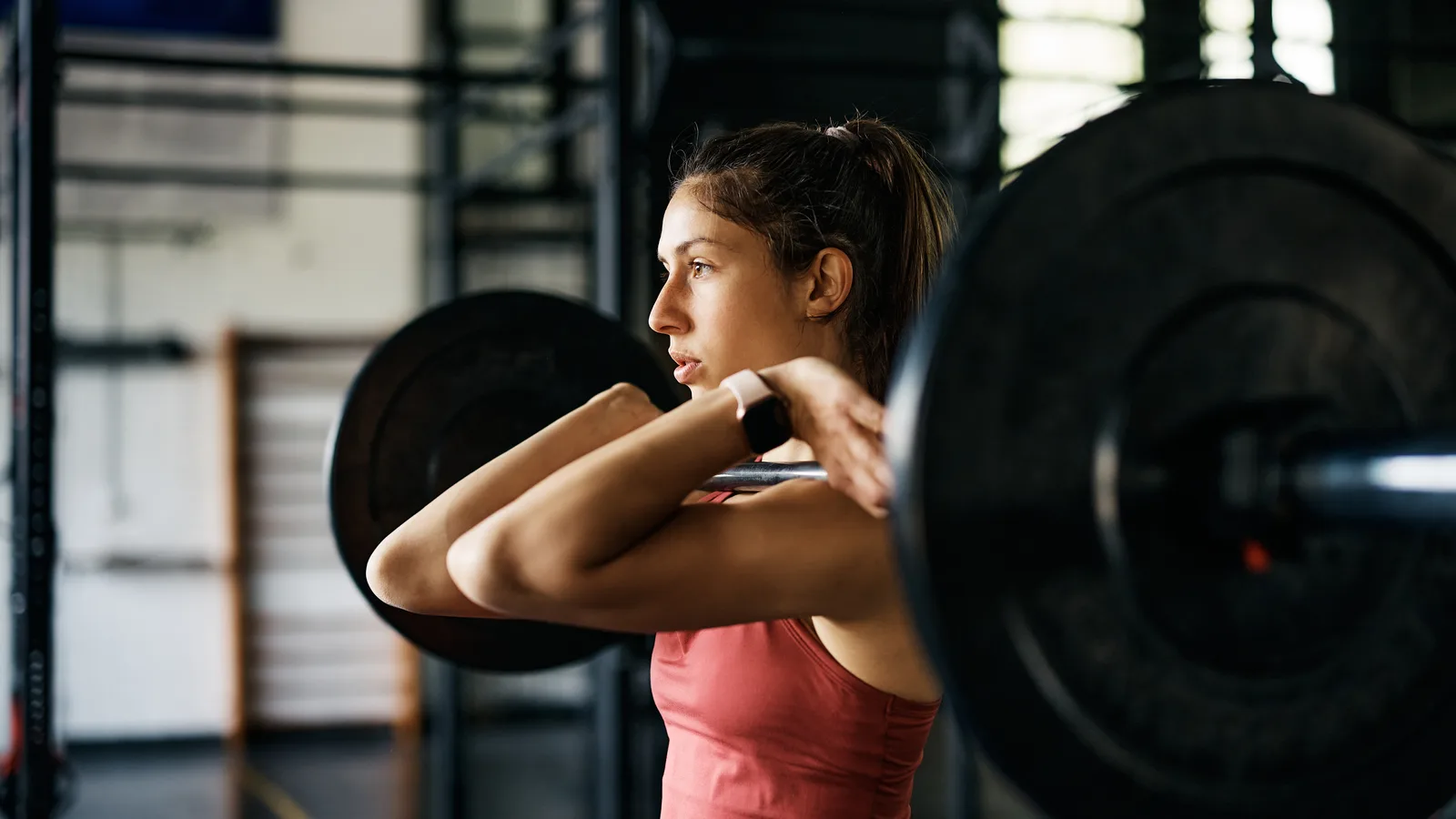
The National Strength and Conditioning Association has replaced its 1989 position statement on training women with a two-part document that reaches a plain conclusion: the principles that build strength, starting with progressive overload, are the same for women and men. The statement finds too little evidence to justify a separate resistance training prescription for female athletes, and too little to support changing a lifting program by menstrual cycle phase for most of them.
What was published, and by whom
The statement ran in the August 2026 issue of the Journal of Strength and Conditioning Research, the association's own peer-reviewed journal. Part II, on training adaptations and program design, appeared online June 12, 2026. Part I, on lifespan, injury and health, followed online July 1. Both are free to read at the journal.
Nine authors wrote both parts, led by Nicole C. Dabbs of California State University, San Bernardino, with colleagues from Middle Tennessee State, Simon Fraser, the University of Kansas, Cardiff Metropolitan, East Carolina, the University of North Carolina at Chapel Hill, Appalachian State and the laboratory company HealthTrackRx. A position statement is a review of existing research with the organization's conclusions attached. It is not a new trial, and it reports no new data.
What it says about lifting
The program design section looks at female athletes of about 18 to 35 and asks whether the evidence is good enough to prescribe training differently from guidelines built largely on studies of men. For resistance training, the authors answer no. The studies available, most of them short, show more similarity than difference in how women and men respond in relative terms. The statement says expectations for gains in strength and power should not differ by sex and should be set by what the athlete and the sport need.
It does not set female-specific loads, sets or weekly frequencies. Instead it names the factors that should drive a program: training age, training history, genetics, the demands of the sport and the athlete's goals. In studies of mostly untrained women, total volume and frequency were the variables that mattered most for strength.
One difference is singled out. Upper-body strength is much lower in women even after accounting for body size, which is not true of the lower body. Where a sport depends on upper-body strength, the authors say a program may need more volume or focus there. Whether men gain relatively more muscle size over long periods of heavy training remains unclear, they write.
The menstrual cycle
The statement reviews a series of meta-analyses and concludes that cycle phase has only a trivial effect on performance, strength and muscle growth in women with regular cycles. Its position is that there is not sufficient evidence to modify resistance training by phase for most active female athletes. For elite athletes chasing small margins, it recommends an individual approach.
Symptoms are treated separately from phases. More than 65 percent of female athletes report cycle-related symptoms, according to the statement, and those can affect readiness to train, sleep and recovery. The authors recommend tracking the cycle and its symptoms and adjusting training in response to them.
Pregnancy, menopause and injury
Part I covers the life stages that Part II sets aside. For girls, it reports that the response to strength and conditioning programs is similar to that of boys and that training can begin before puberty. For pregnancy and the months after birth, it calls for a program built around the individual and the physical changes of each trimester; its trimester table includes pelvic floor exercises, continued squatting and a move away from exercises done lying on the back from the second trimester on.
For perimenopause and after, the statement says resistance training should aim to maintain or improve muscle mass and bone mineral density. It also asks that strength programs include components of anterior cruciate ligament injury prevention, and it flags iron deficiency and low energy availability as health concerns more common in female athletes.
What is not known
The authors state that high-quality research on women remains scarce, scarcer still in trained female athletes, and that some differences once attributed to biology may reflect differences in training level. They found too few studies to make a female-specific recommendation for speed, agility or plyometric work. They call for long-term studies in specific sports and for future guidelines covering puberty, pregnancy and the menopause transition. They also write that unequal access to coaching and facilities limits female athletes in ways that are often wrongly attributed to biology.
Both parts can be read in full at the journal links below. A lifter who is pregnant, recently gave birth or has irregular or missing periods can bring the relevant section to a clinician and ask how it applies.
This article reports research and expert guidance. It is not medical advice. Talk to your clinician before changing medication, treatment or a medical diet.
Sources
- Journal of Strength and Conditioning Research: NSCA Position Statement on Strength and Conditioning of Female Athletes, Part II: Training Adaptations and Program Design
- Journal of Strength and Conditioning Research: NSCA Position Statement on Strength and Conditioning of Female Athletes, Part I: Lifespan, Injury, and Health Considerations
- PubMed: record for Part II (PMID 42283375)
- PubMed: record for Part I (PMID 42383448)
Loading comments…