












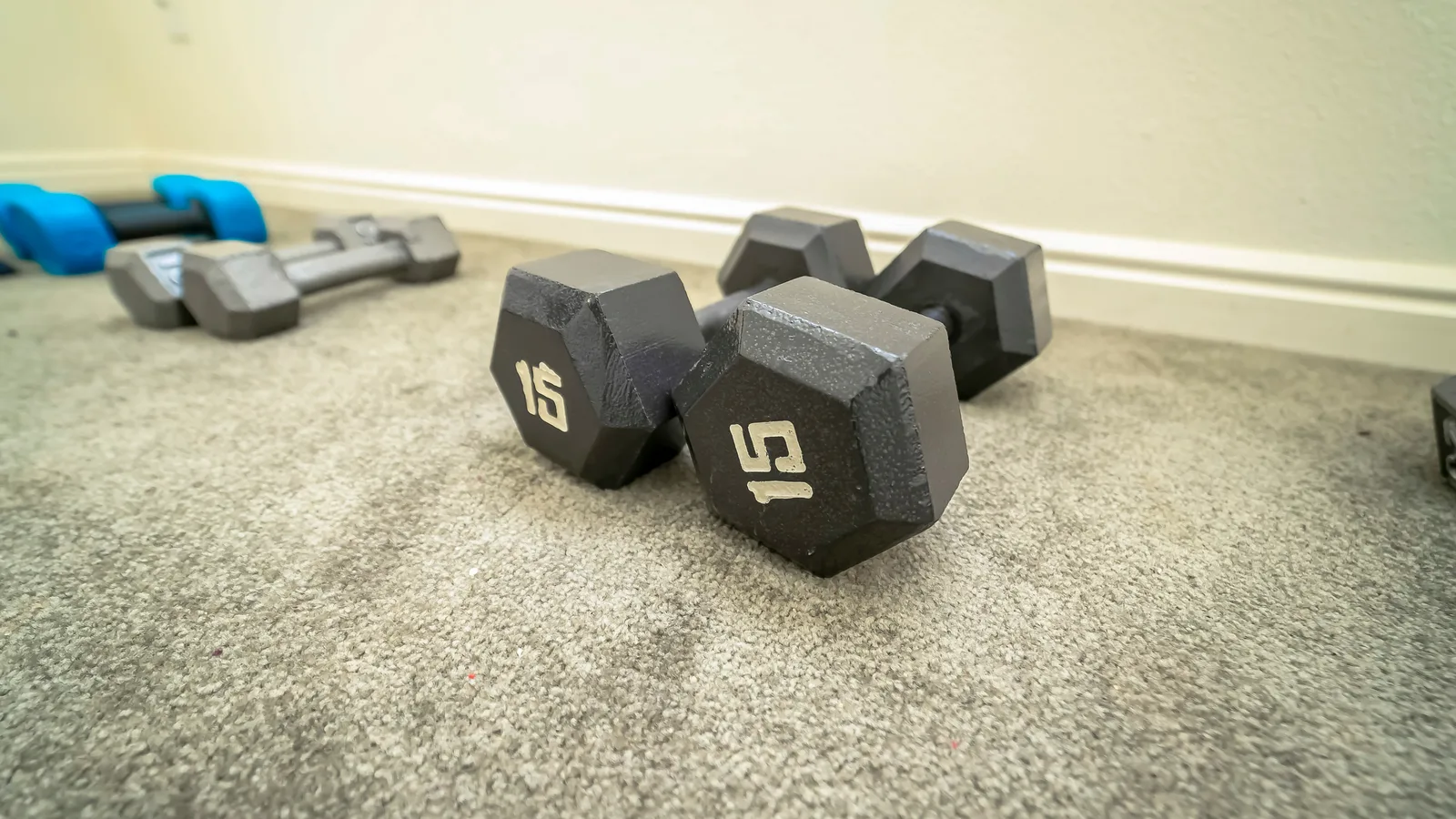
Light dumbbells can build as much muscle as heavy weights, provided every set is taken to the point where another rep is not possible. That was the result of a 2017 systematic review and meta-analysis of 21 trials in the Journal of Strength and Conditioning Research, which compared low-load training at 60 percent or less of a person's one-rep max with high-load training above 60 percent. Heavy loads still won on one measure: the maximum weight a person could lift once.
How the review was built
The authors, led by Brad Schoenfeld of Lehman College in the Bronx, set strict entry rules. Every trial had to compare a low-load group with a high-load group, every set in both groups had to be performed to momentary muscular failure, the programs had to last at least six weeks, and participants had to be free of medical conditions or injuries that limited training. Each trial also had to measure muscle size, strength or both. Twenty-one studies met those rules.
What it found
- Muscle size: changes were similar between light and heavy loads.
- One-rep max strength: gains were significantly greater with heavy loads.
- Isometric strength (pushing against an immovable resistance): no significant difference between the two.
The authors concluded that maximal strength comes from heavy loads, while muscle growth can be achieved across a wide range of loads. The practical meaning for home training is that the weight on the dumbbell matters less for muscle than how close each set comes to the end of what the muscle can do.
The catch: failure with a light weight takes many reps
At 60 percent of a one-rep max or lighter, reaching failure takes many more repetitions than a heavy set does, and the final reps are hard work. Every trial in this review asked for true failure on every set. Later research has looked at stopping a little short, and a single-set program covered here earlier found that ending two reps before failure built the same strength as going all the way, but that work used moderate to heavy loads. The 21 trials here do not say whether light sets stopped well short of failure would do the same.
What it does not cover
The trials enrolled healthy participants, so the results do not describe people training around an injury or a medical condition. Muscle-size measures in short trials capture weeks to months, not years. And the review compared loads, not equipment: it says nothing directly about bands, kettlebells or body weight, only about how heavy the resistance was relative to each person's maximum.
How it fits the guidelines
The Physical Activity Guidelines for Americans ask adults to do muscle-strengthening activity that works all major muscle groups on two or more days a week. The guidelines do not require a gym or a particular load; this review is one reason a set of light dumbbells and a willingness to finish each set hard is a workable way to meet them at home.
Sources
- Journal of Strength and Conditioning Research: Strength and hypertrophy adaptations between low- vs. high-load resistance training, a systematic review and meta-analysis (2017)
- PubMed record and abstract, PMID 28834797
- U.S. Department of Health and Human Services: Physical Activity Guidelines for Americans
Loading comments…