












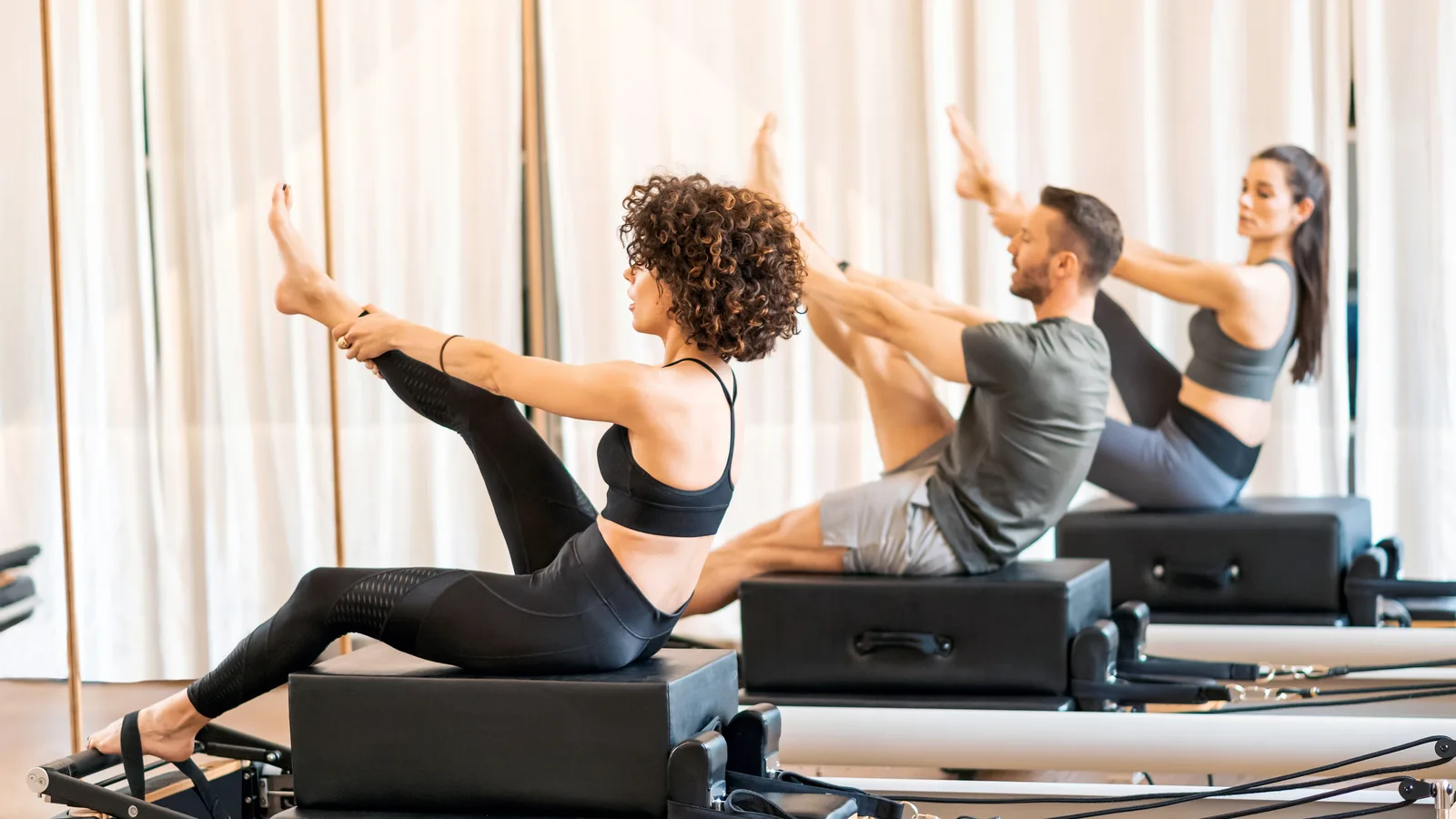
Pilates classes leave people shaking through the last repetitions, so it is natural to wonder whether a reformer session or a mat class counts as the strength training the guidelines ask for. The honest answer is that it can, depending on how the class is run, and that the trials so far show clearer gains in flexibility than in measured strength.
What the guidelines ask for
The Physical Activity Guidelines for Americans, issued by the U.S. Department of Health and Human Services, recommend that adults do muscle-strengthening activities on two or more days a week. Two conditions matter:
- Intensity: the work should be of moderate or greater intensity, meaning the muscles are worked hard enough that the last repetitions take real effort.
- Coverage: it should involve all the major muscle groups, which the guidelines list as the legs, hips, back, abdomen, chest, shoulders and arms.
The guidelines do not hand out a list of approved activities. They define what the muscles need to experience, and any form of exercise that delivers it counts.
How Pilates measures up
Many Pilates sessions work the trunk and hips hard. A reformer adds spring resistance, and the springs can be set heavier or lighter. Whether a session covers the chest, shoulders and arms with enough load depends on the class. A session that is mostly core and stretching sits closer to flexibility training; one that includes loaded pushing, pulling and leg work on heavier springs fits the guideline's description more closely.
What the trials found
A systematic review and meta-analysis published in September 2026 in the journal Sports, by researchers at the University of Novi Sad in Serbia, gathered the trials of structured Pilates programs in adult women. It included 12 studies, published between 2007 and 2025, with about 540 participants. It was funded by a regional government science office in Serbia, and the authors declared no conflicts.
- Flexibility: sit-and-reach scores improved, a moderate effect and the clearest result in the review.
- Body measures: average body mass index fell by about 1.2 points and body weight by about 4 kilograms (about 9 pounds) across the programs.
- Strength measures with pooled data: grip strength and vertical jump showed no significant pooled change, and neither did lean body mass.
- Other strength measures: individual studies reported gains in muscular strength and endurance, balance and everyday function, but these could not be pooled, so the authors describe them in words rather than numbers.
The authors caution that the programs, the women studied and the quality of the trials varied widely. Grip strength and jumping are also not the muscles Pilates trains most, so those null results do not settle whether a class builds the trunk and hip strength it targets.
How to make a class count
- Look for classes that progress the resistance over weeks, the same principle any strength program relies on.
- On a reformer, use spring settings that make the last few repetitions of each exercise genuinely hard.
- Check that the week covers the upper body. If a class is mostly core and stretching, adding one session of weights, bands or bodyweight pushing and pulling fills the gap.
- Count a Pilates day toward the two-day target only when it meets both the effort and the coverage tests above.
Sources
- U.S. Department of Health and Human Services: Physical Activity Guidelines for Americans, 2nd edition
- Sports: Effects of Pilates Programs on Body Composition, Flexibility, Muscular Strength, Balance, Functional Performance and Respiratory Function in Adult Women: A Systematic Review and Meta-Analysis (2026)
- PubMed record and abstract, PMID 42784403
Loading comments…