












Strength training is usually measured in pounds lifted and chair stands completed. A new trial from Brazil measured something else: whether six months of lifting on wobbly surfaces changed how well older adults with early memory concerns did on thinking tests. Two of the tests moved. Most did not.
The trial
The study was published online on November 7 in the Journal of Nutrition, Health and Aging. Researchers at the Federal University of the Sao Francisco Valley and the University of Pernambuco in Brazil ran it with colleagues at the University of Porto in Portugal and the University of British Columbia in Canada. It was funded by two Brazilian public science agencies, the Pernambuco state research foundation and the National Council for Scientific and Technological Development.
It enrolled 162 adults aged 65 or older who lived independently and screened as likely to have mild cognitive impairment, the stage between normal aging and dementia. Their average age was 70, and their average score on the Montreal Cognitive Assessment, a common screening test, was 20 out of 30 (26 or above is usually read as normal).
Participants were randomly split into two groups for 24 weeks:
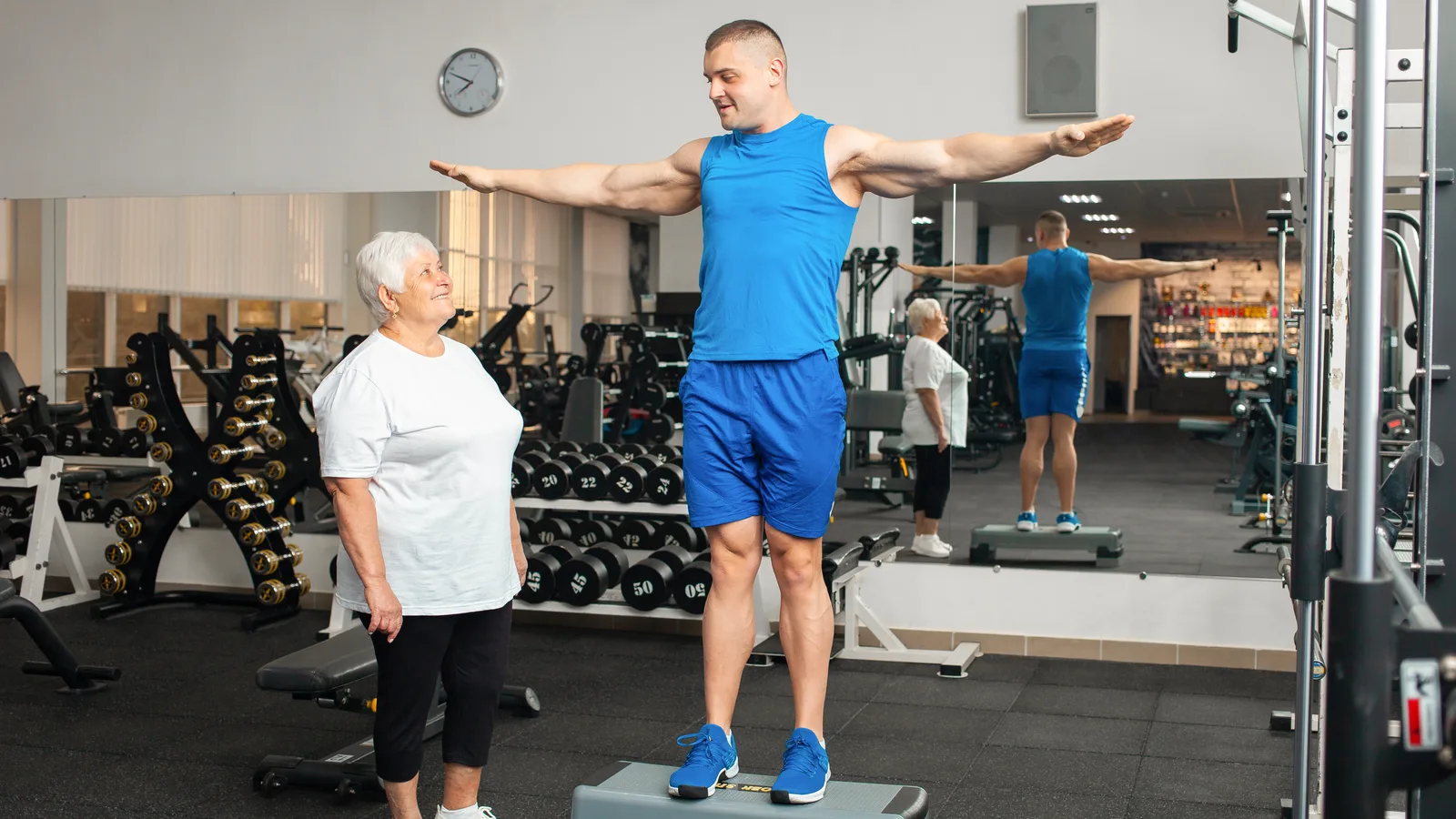
- Instability resistance training (80 people): two sessions a week of seven strength exercises, three sets of 10 to 15 repetitions, performed while standing or kneeling on unstable surfaces such as foam balance pads and half-dome trainers.
- Active control (82 people): low-intensity functional, stretching and relaxation exercises with no progression and no added difficulty over time.
The people scoring the thinking tests did not know which group each participant was in, which keeps their expectations out of the results.
What changed
After 24 weeks, the training group did better than the control group on two measures of executive function, the mental skills used for planning, switching between tasks and holding information in mind:
- Verbal fluency: about 1.2 more words starting with the letter A named in the time limit.
- Digit span forward: about 0.7 points higher on a test of repeating back strings of numbers.
The two groups did not differ on the rest of the battery: the Stroop color test, the digit symbol substitution test, both parts of the Trail Making Test and the memory measures.
How to read it
This is a reasonably large trial for exercise research, with blinded scoring and an active comparison group, which is a stronger design than comparing exercisers with people who did nothing. The changes were small, though, and they appeared on two tests out of many, so the result is a signal in specific skills rather than a broad improvement in thinking. The trial also did not test whether the unstable surfaces mattered: it did not include a group doing the same lifting on solid ground.
For context, the federal Physical Activity Guidelines for Americans already recommend that older adults do muscle-strengthening activity on two or more days a week and add balance training as part of a multicomponent program. This trial used exactly that frequency.
If you are thinking about trying it
Training on foam pads and half-dome trainers adds a fall risk that ordinary strength work does not. The trial was supervised. Anyone with balance problems, dizziness or a recent fall is a person to talk with a physical therapist or clinician first, and a good question to bring is whether balance work should be done next to a support rail at the start.
This article reports research and expert guidance. It is not medical advice. Talk to your clinician before changing medication, treatment or a medical diet.
Sources
- Journal of Nutrition, Health and Aging: Efficacy of 24-week instability resistance training on cognitive function of older adults with probable mild cognitive impairment (2026)
- PubMed record and abstract, PMID 42998615
- U.S. Department of Health and Human Services: Physical Activity Guidelines for Americans, 2nd edition
Loading comments…