












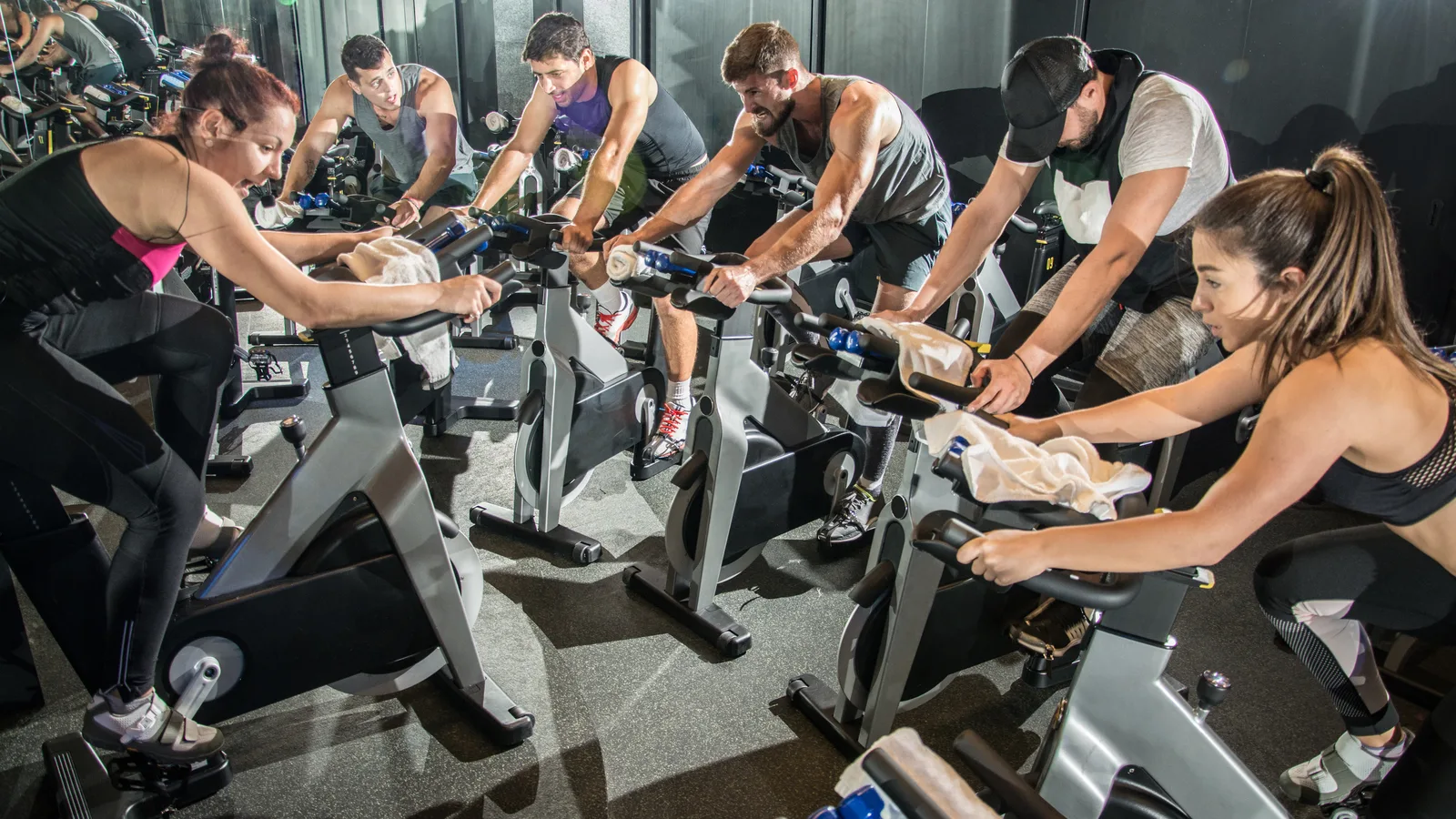
Cold weather moves a lot of riding indoors, onto studio bikes and home trainers. Indoor cycling is one of the most popular group classes in American gyms, so it is worth knowing what the research on it actually covers, and how thin some of it is.
The review
Researchers at the University of Extremadura and the Catholic University of Murcia in Spain published a systematic review of indoor cycling in the journal Medicina in August 2019. Following standard review methods, they searched for studies of indoor cycling, indoor bicycle and spinning exercise through January 2019. Of 300 studies found, 13 met their criteria. Together those 13 included 372 people, 306 of them women. The review received no outside funding.
What the studies measured, and found
- Aerobic capacity: indoor cycling on its own was linked to improvements in aerobic fitness.
- Blood pressure, cholesterol and body composition: the studies reported improvements, most clearly when indoor cycling was paired with a diet or with other exercise.
From that, the authors recommended combining indoor cycling with diet changes for weight loss, cholesterol and blood pressure, and said indoor cycling alone may improve aerobic capacity.
The caveat the authors put first
The authors wrote that the field lacks randomized controlled trials and that their conclusions should be read with caution. Thirteen studies with a few hundred people, most of them women, is a small base. Many of the studies combined cycling with something else, so the cycling's own share of any change is hard to separate.
How to read that as a rider
Nothing in the review suggests indoor cycling works differently from other aerobic exercise. A class at a steady hard effort for 45 minutes counts toward the federal guideline of 75 to 150 minutes of vigorous activity a week, or 150 to 300 minutes of moderate activity. What the review does not support is the idea that a bike in a dark room does something special for weight loss by itself; in the studies, the bigger changes came when riding came with a change in eating.
Setting up the bike
Studio bikes adjust, and saddle height is the setting with research behind it:
- Saddle height: with the pedal at the bottom of the stroke, the knee should keep a slight bend. A 2011 review in Sports Medicine of saddle height research suggested a knee bend of about 25 to 30 degrees at the bottom.
If you are starting with high blood pressure or another heart condition, an instructor's hardest intervals are worth discussing with a clinician first.
This article reports research and expert guidance. It is not medical advice. Talk to your clinician before changing medication, treatment or a medical diet.
Sources
- Medicina: Health Benefits of Indoor Cycling: A Systematic Review (2019)
- PubMed Central: full text and funding statement
- Sports Medicine: Effects of Bicycle Saddle Height on Knee Injury Risk and Cycling Performance (2011)
- U.S. Department of Health and Human Services: Physical Activity Guidelines for Americans
Loading comments…