












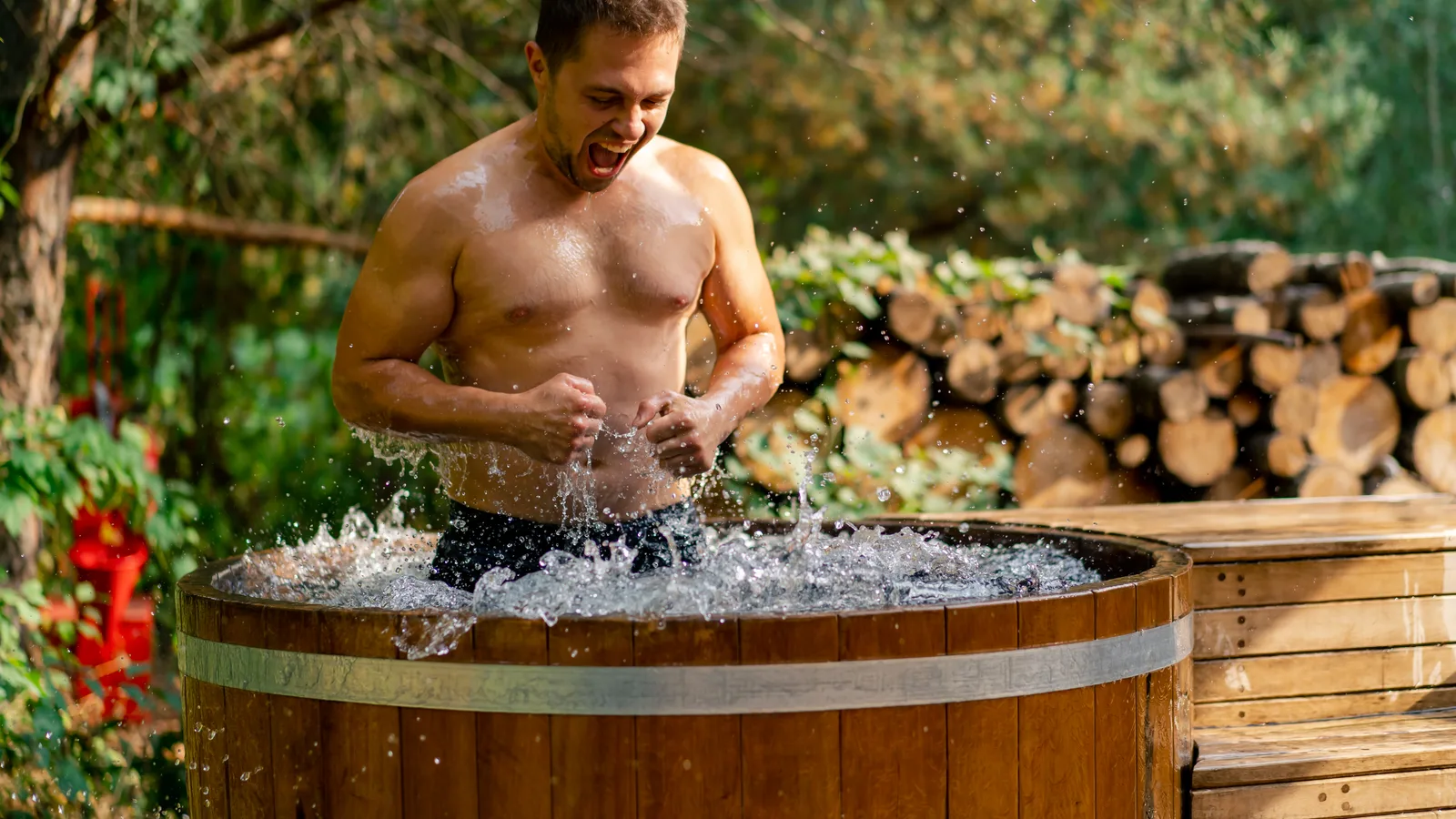
A cold plunge after a hard session has become a gym ritual. For people who lift to get stronger or build muscle, the timing of that plunge matters, according to the widest look at the evidence so far. An umbrella review in Sports Medicine - Open, published September 30, 2026, pulled together 15 systematic reviews with meta-analyses on cold-water immersion after exercise. Its conclusion for lifters: regular plunges right after resistance training were tied to smaller gains in strength, muscle size and power, while the same habit carried no sign of harm for endurance training.
What an umbrella review is
A meta-analysis pools individual trials. An umbrella review goes one level up and pools the meta-analyses. The team at Edith Cowan University in Australia, led by doctoral researcher Erfan Berjisian, searched eight databases for reviews published from 2011 to 2025 and found 15 that met their rules. Together those reviews drew on 161 separate studies and 3,210 participants. The protocol was registered in advance, and the paper reports no outside funding.
What it found for lifting
- Muscle size. The review leans on a 2024 meta-analysis in the European Journal of Sport Science by Piñero and colleagues, which found a small reduction in hypertrophy when lifters used cold water after training. Most of the trials in that analysis used water around 50 degrees Fahrenheit for 10 to 20 minutes, within about 15 minutes of finishing, over programs of four to eight weeks.
- Strength. Across ten studies, strength gains were smaller with regular immersion. The effect showed up when only the trained limb went into the water; whole-body immersion showed little difference.
- Strength-related performance. A smaller set of five studies found lower one-rep maximums, isometric strength, strength endurance and explosive output after training blocks that included regular cold water.
What it found for everything else
Cold water did what many people use it for. Muscle soreness was lower for up to four days, and blood markers of muscle damage were lower 24 to 72 hours later. Endurance performance improved in the first hour after a plunge, and the reviews found no evidence that regular use dulled aerobic adaptations. Jumping and sprinting dropped in the first hours after a cold soak and often recovered or improved a day to three days later, so the authors flag explosive work soon after a plunge, unless the body has been rewarmed.
The protocols that performed best for recovery were 10 to 15 minutes in water of roughly 50 to 59 degrees Fahrenheit (10 to 15 degrees Celsius).
What it does not show
The authors rate the evidence plainly. Most of the included reviews were of low or critically low quality on a standard appraisal tool, and the certainty of the findings was low to very low, mainly because results varied between studies and samples were small. About 9 in 10 participants were men. The strength and muscle reviews overlap heavily, sharing many of the same underlying trials, and few studies followed anyone for more than a couple of months.
Not every analysis lines up. A 2026 network meta-analysis of 87 studies in BMC Sports Science, Medicine and Rehabilitation found no cold-water protocol that differed from passive rest on strength, although that work mostly measured short-term recovery rather than months of training.
How the findings break down by goal
The review's practical framing is about timing and purpose. For a runner or cyclist in a heavy block, or an athlete with two events close together, the evidence points to cold water as a recovery tool with little downside. For someone whose goal from a lifting program is bigger, stronger muscles, the trials that exist suggest a plunge straight after that session may cost a little of the gain, while a plunge on a separate day or after an endurance session was not linked to the same effect.
This article reports research and expert guidance. It is not medical advice. Talk to your clinician before changing medication, treatment or a medical diet.
Sources
- Sports Medicine - Open: Strategic Application of Post-exercise Cold-Water Immersion to Enhance Performance Recovery and Adaptation, an Umbrella Review (September 2026)
- European Journal of Sport Science: Piñero et al., cold-water immersion and resistance training hypertrophy meta-analysis (2024)
- BMC Sports Science, Medicine and Rehabilitation: network meta-analysis of cold-water immersion protocols (2026)
Loading comments…