












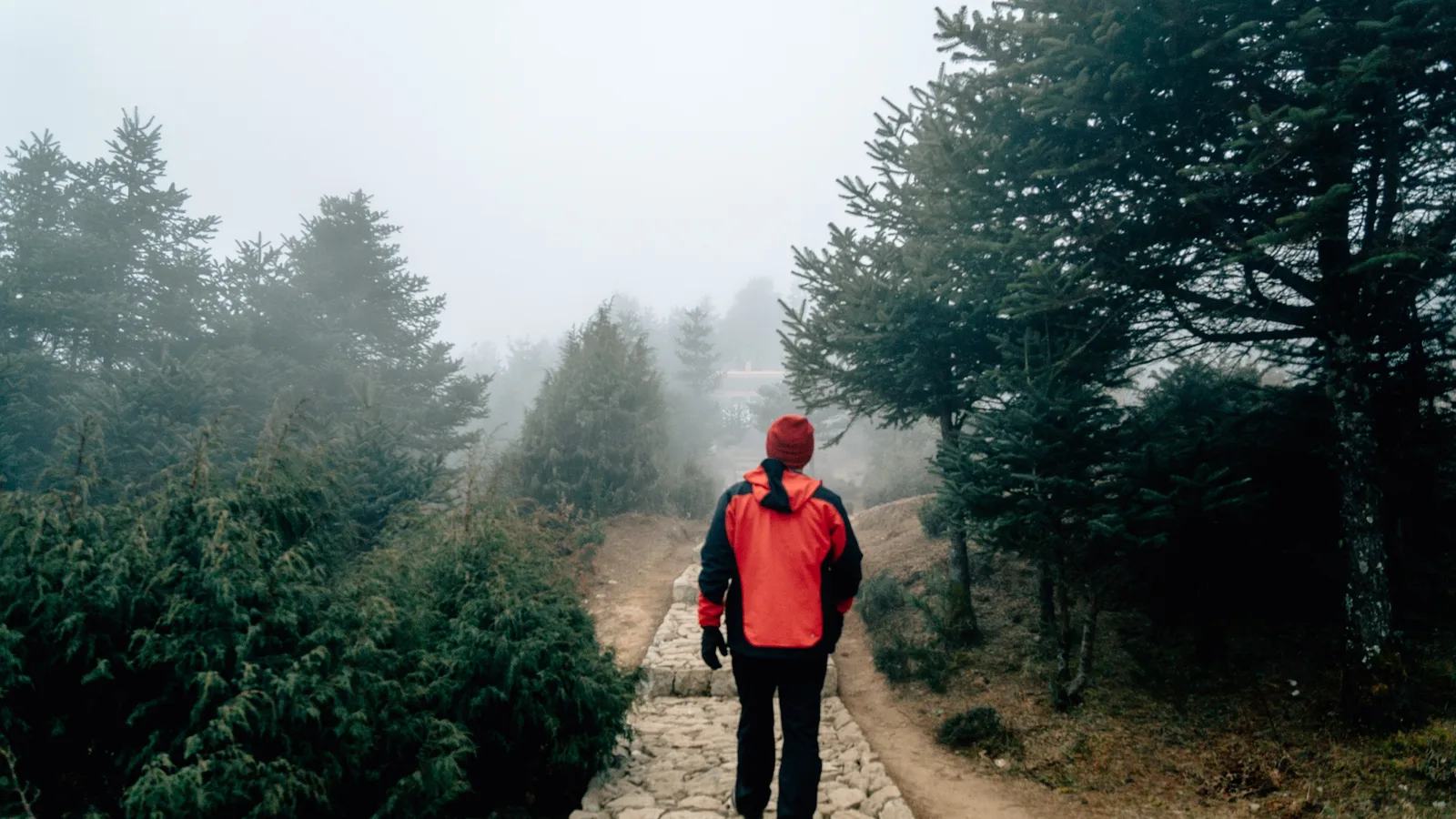
Hypothermia does not need freezing weather. The Centers for Disease Control and Prevention says it can set in at cool temperatures above 40 degrees Fahrenheit when a person is chilled by rain, sweat or cold water. The National Weather Service puts the upper edge at 60 degrees, and the National Park Service tells hikers in Olympic National Park that it can happen at 50. A gray late-November day in the 40s, with drizzle and a breeze on the ridge, sits in the middle of that range.
What hypothermia is
The definition is a number. Hypothermia is a body temperature below 95 degrees, according to both the weather service and the CDC, which calls it a medical emergency. It develops when the body loses heat faster than it can make it. Stay in that state long enough and the body's stored energy runs down, and its temperature follows.
The part that makes it dangerous on a trail is what happens next. The CDC notes that a low body temperature affects the brain, so the person may not think clearly or move well, and may not realize anything is wrong. The hiker in trouble is often the last to know.
Why 45 degrees and wet is enough
Three things pull heat out of a hiker: cold air, water and wind. The park service's page for Wrangell-St. Elias National Park lists air temperatures between 30 and 60 degrees as hypothermia weather, especially with wind or rain, and states plainly that getting wet is likely to lead to it.
The water does not have to come from the sky. New River Gorge National Park's guidance points out that sweat from the climb leaves clothing damp, and that wet fabric chills the body, cotton and jeans most of all because they hold water. That is the usual shape of a shoulder-season case: a warm, sweaty ascent, then a stop at an exposed overlook.
What the wind chill chart says, and what it leaves out
Wind is the third factor, and the weather service has a formula for it. Wind chill describes the rate at which exposed skin loses heat in moving air. The index is defined only for air temperatures at or below 50 degrees with wind above 3 mph. Run the agency's published formula for a 40-degree day with a 20 mph wind and the result is about 30 degrees. For comparison, the agency's own chart example is 0 degrees with a 15 mph wind, which works out to minus 19, a level at which exposed skin can freeze in 30 minutes.
Two limits matter for a hiker. First, the weather service notes that wind cannot drive body temperature below freezing when the air is above freezing, so frostbite is not the risk on a 40-degree day. Hypothermia still is. Second, the chart assumes dry skin and says nothing about a soaked shirt, which is why a mild reading on the chart is not an all clear.
How the agencies say to prevent it
The guidance from all three comes down to staying dry and blocking wind, and the order of operations matters as much as the gear.
- Layers, managed early. The CDC recommends several layers of loose-fitting clothing and a water-resistant outer shell. Wrangell-St. Elias adds the timing: vent or remove layers before sweating starts, and put on rain gear or warm clothing before becoming soaked or chilled, not after.
- Wool or synthetics, not cotton. Olympic National Park specifies wool or polypropylene base layers under rain gear, plus a hat.
- Dry spares. New River Gorge advises carrying an extra set of dry clothes, socks above all, with a warm layer, a warm hat and rain gear in the pack on every hike.
- Food and water. The park service recommends high-calorie food through the day, before exhaustion sets in, and steady fluids. The body needs fuel to make heat.
The warning signs
The CDC's list for adults is shivering, exhaustion, confusion, fumbling hands, memory loss, slurred speech and drowsiness. Park service pages add stumbling, clumsiness and poor judgment, and ask each member of a group to watch the others, because the affected person may not notice.
Shivering that stops is not improvement. Wrangell-St. Elias describes severe hypothermia as the point where shivering has ceased, mental status has dropped sharply and core temperature is below 90 degrees.
What to do first
The agencies agree on the opening steps:
- Get medical help as soon as possible. A temperature below 95 degrees calls for immediate medical attention, the CDC says.
- Get the person out of the wind and into shelter, and put insulation between them and the ground.
- Remove wet clothing and replace it with dry layers.
- Warm the center of the body first: chest, neck, head and groin. The CDC suggests skin-to-skin contact under loose, dry layers when nothing else is available.
- Give warm drinks to a person who is awake, never alcohol, and nothing by mouth to someone who is unconscious. The park service also recommends quick calories such as a candy bar.
- Handle the person gently. The weather service warns against rubbing or rough handling, and New River Gorge against direct heat such as hot water or a heating pad.
In a severe case, the park service says rewarming in the field is usually ineffective and the person needs transport to a medical facility. The CDC adds that someone with severe hypothermia may appear to have no pulse or breathing, and that CPR should begin and continue until help arrives, because some people in that state have been revived.
Before the next cold hike
Check the hourly forecast at weather.gov for the trailhead and for the highest point on the route, and read three lines together: temperature, wind speed and chance of rain. If the air is under 60 degrees and either of the other two is in play, the conditions fit the agencies' description, and the dry layer and shell belong in the pack. Anyone who has had a cold injury, or who takes medication that affects circulation, can ask a clinician how cold exposure applies to them.
This article reports research and expert guidance. It is not medical advice. Talk to your clinician before changing medication, treatment or a medical diet.
Sources
- Centers for Disease Control and Prevention: Preventing Hypothermia
- National Weather Service: During Extremely Cold Weather
- National Weather Service: Understanding Wind Chill
- National Park Service, Olympic National Park: Wilderness Safety
- National Park Service, Wrangell-St. Elias National Park and Preserve: Hypothermia
- National Park Service, New River Gorge National Park and Preserve: Heat and Cold Related Illness
Loading comments…