












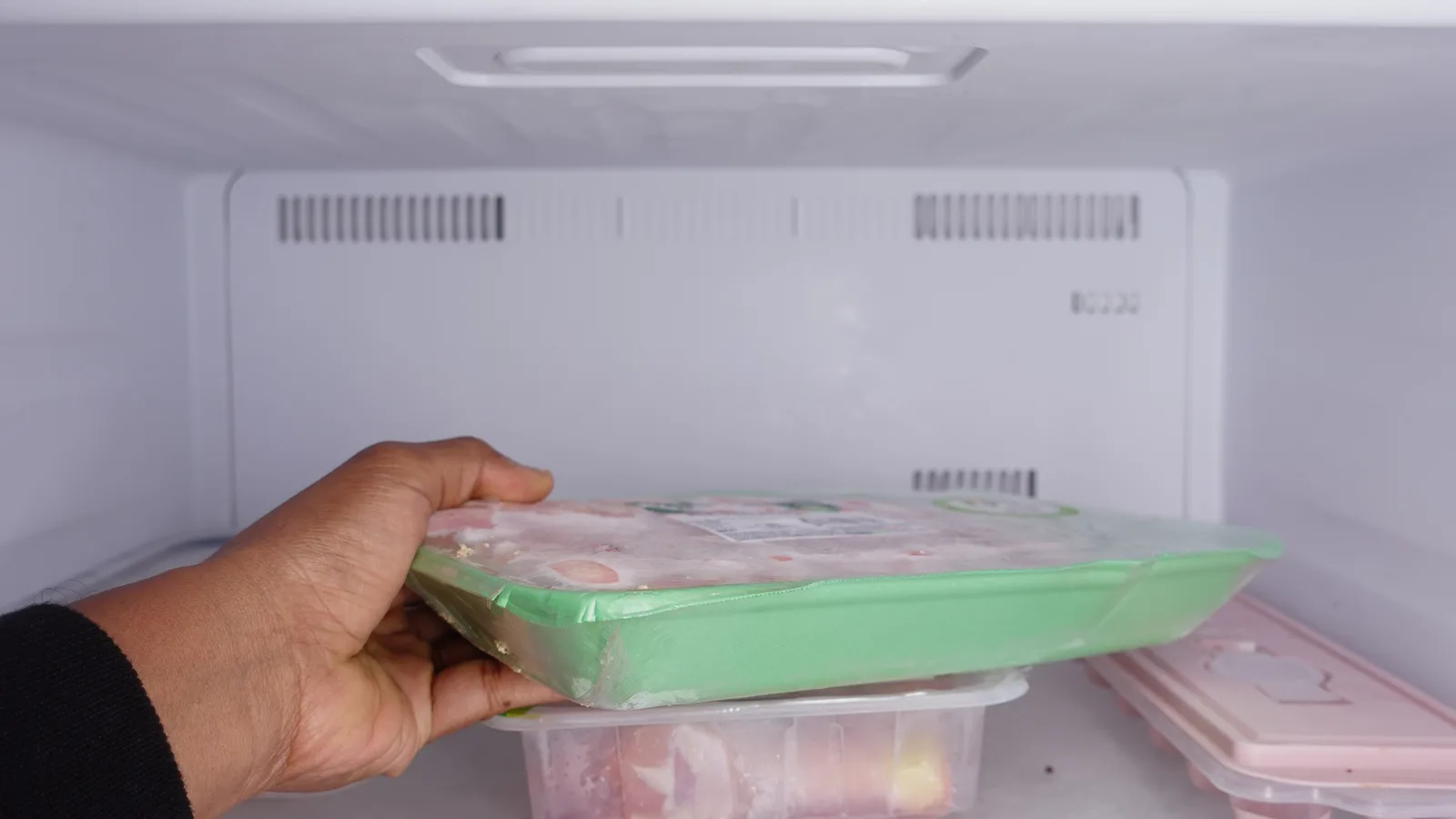
A freezer full of batch-cooked meals raises the same question every few weeks: is the chili from last month still good? The Food and Drug Administration's answer has two parts. Food held at 0 degrees Fahrenheit stays safe indefinitely. What the freezer slowly takes away is quality.
Freezing stops bacteria. It does not kill most of them
The FDA's food storage guidance draws the line plainly: freezing does not kill most bacteria, but it does stop them from growing. That is why time in the freezer is not a safety clock. A meal frozen for six months at 0 degrees is as safe as it was on the day it went in.
It is also why the temperature matters. The agency says a freezer should be at 0 degrees Fahrenheit (minus 18 Celsius) and a refrigerator at or below 40 degrees. It recommends keeping an appliance thermometer in each, placed near the front where it is easy to read, and checking it at least once a week.
What does change over time
Quality declines the longer food stays frozen, the FDA says, and it lists what can be affected: tenderness, flavor, aroma, juiciness and color. Nutrition holds up better. According to the agency, freezing does not reduce nutrients, and a food's protein value changes little.
Freezer burn belongs on the quality side too. It shows up as grayish-brown, leathery spots and happens when food is not wrapped securely in airtight packaging, which lets the surface dry out. The FDA describes it as a food-quality issue, not a food-safety issue.
The rule that matters most is before the freezer
Since freezing only pauses bacteria, a meal goes into the freezer carrying whatever grew on it beforehand. The FDA's two-hour rule covers that window: food that needs refrigeration, leftovers included, should not sit at room temperature for more than two hours, or more than one hour when the air temperature is above 90 degrees.
The agency also advises against packing a refrigerator or freezer so tightly that air cannot circulate, since moving air is what pulls the heat out of a fresh batch, and it says leftovers should be stored in tight containers.
If the power goes out
Keep the doors closed as much as possible, the FDA says. An unopened refrigerator keeps food cold for about four hours. A full freezer holds an adequate temperature for about 48 hours if the door stays shut.
When the power returns, the thermometer decides. If the freezer thermometer reads 40 degrees or below, the food is safe and may be refrozen. Without a thermometer, the agency says to check each package: food that still contains ice crystals, or that is at 40 degrees or below, is safe to refreeze or cook. Appearance and smell are not reliable guides.
What this means on a batch-cooking day
Put together, the guidance points to a few habits. Get cooked food chilled and into the freezer well inside the two-hour window rather than letting it cool on the stove all afternoon. Use airtight containers or bags with the air pressed out, since air at the surface is what causes freezer burn. Leave some room around new containers so cold air can reach them.
And label each container with the dish and the date. Nothing in the freezer is counting down to unsafe, but the date tells you which meals to eat first while they still taste the way they did when they were made.
Loading comments…