












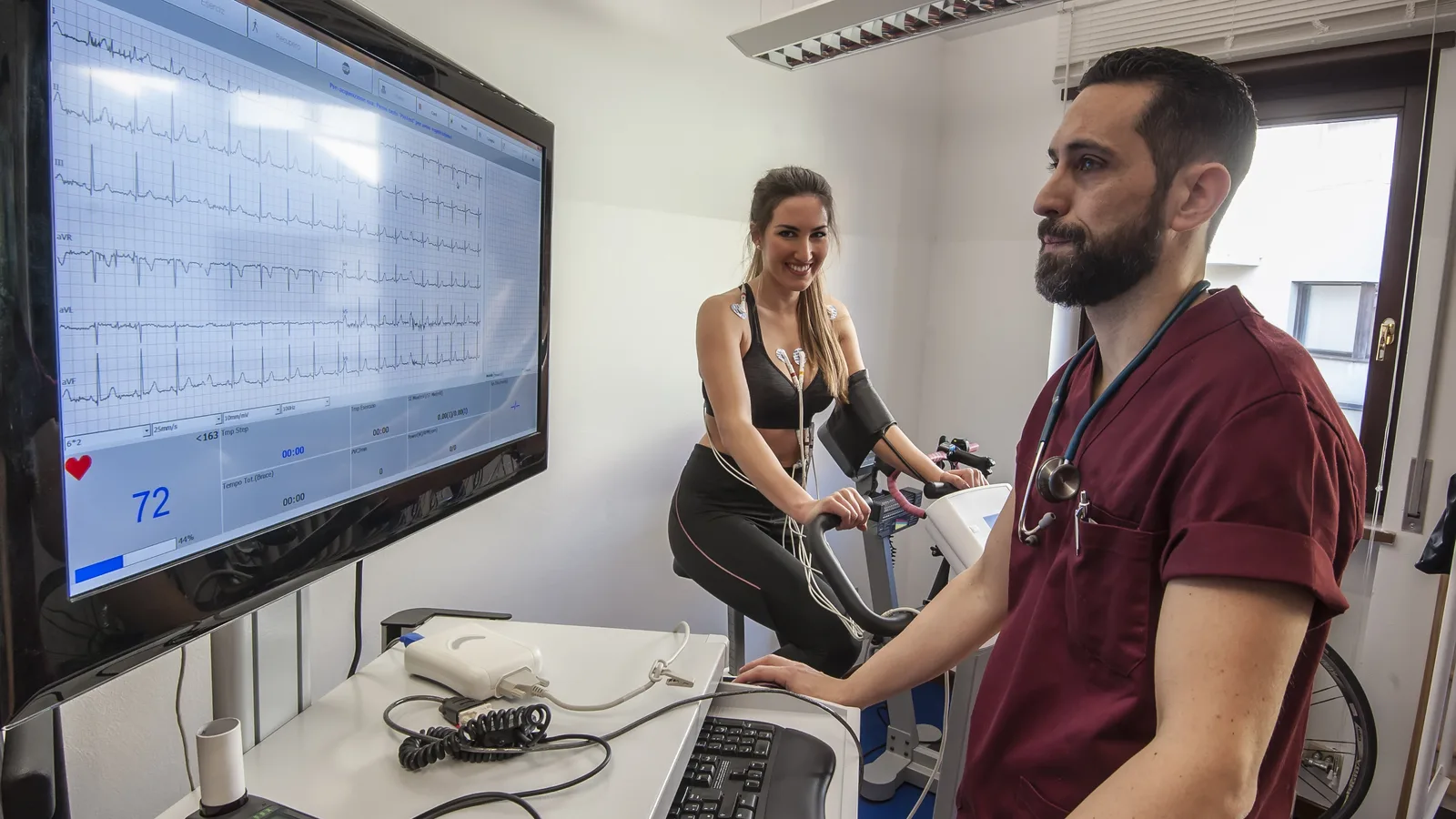
People with cancer who started a high-intensity interval training program completed about 91 percent of it, and about 11 percent dropped out, according to a systematic review and meta-analysis published November 12, 2026, in the journal Current Oncology Reports. The review pooled 22 studies with 559 participants assigned to interval training before, during or after cancer treatment. None of the studies that tracked adverse events recorded a serious one.
The harder part came earlier. The pooled recruitment figure was 57 percent, and it swung widely from study to study.
What the review asked
Most exercise research in oncology asks whether training improves fitness, fatigue or quality of life. This review asked a more basic question: can interval training be delivered to people with cancer at all? That is what researchers mean by feasibility. It covers whether people agree to join, whether they do the sessions, whether they stay to the end, and whether anyone is hurt.
The team, based at the National and Kapodistrian University of Athens and Sheffield Hallam University in England, searched PubMed, Scopus and Web of Science from each database's start through December 31, 2025. A study qualified if it enrolled adults with cancer, used a HIIT program and reported feasibility outcomes. Both randomized trials and non-randomized studies were included. The review followed the PRISMA reporting standard and was registered in advance in the PROSPERO database.
The pooled numbers
- Recruitment: 57 percent across 20 studies, with a 95 percent confidence interval of 41 to 72 percent.
- Adherence: 91 percent across 21 studies, with a confidence interval of 86 to 95 percent.
- Dropout: 11 percent across 20 studies, with a confidence interval of 6 to 16 percent.
- Adverse events: reported in six studies, none of them serious.
The authors looked for differences by study design, by where the training took place, by treatment phase (before, during or after treatment) and by how many sessions a week were scheduled. None of those subgroup comparisons reached statistical significance. In other words, the review did not find that adherence or dropout was clearly worse during treatment than after it, though small subgroups make that kind of difference hard to detect.
The limits the authors name
The authors describe HIIT as appearing feasible and safe for people with cancer, particularly once they have enrolled, and then attach several cautions.
Recruitment showed considerable heterogeneity, meaning the individual studies disagreed with one another by a wide margin, so the 57 percent average describes no single program well. Adherence and dropout showed moderate heterogeneity. The authors also cite risk of bias in the underlying studies and rate the certainty of the evidence, using the GRADE system, as limited.
Three more points follow from the numbers themselves. First, 559 people across 22 studies is an average of about 25 interval-training participants per study, which is small. Second, only six of the 22 studies reported adverse events, so the finding of no serious events rests on a minority of the evidence. Third, people who agree to join an exercise study are not a cross-section of everyone in cancer care. With 57 percent recruitment, the adherence figure describes those who said yes.
The published abstract does not list the specific interval protocols the studies used (the length of the hard efforts, the intensity targets or the number of weeks), the cancer types involved, or a funding source. The full text is behind the publisher's paywall and those details could not be confirmed for this article. The authors declared no competing interests.
Where this sits in current guidance
The standing reference for exercise during and after cancer is the American College of Sports Medicine's 2019 consensus statement, written by an international roundtable and published in Medicine & Science in Sports & Exercise. It concluded that exercise training and testing are generally safe for cancer survivors and that every survivor should avoid inactivity.
Its general prescription is moderate, not high, intensity: aerobic training at least three days a week for at least 30 minutes, over 8 to 12 weeks, with resistance training at least two days a week adding similar benefits. Those doses were tied to less anxiety, fewer depressive symptoms, less fatigue, better physical function and better quality of life. The statement did not issue a prescription for interval training. It said the evidence at the time was not sufficient for one.
The roundtable also sorted people by how much medical review they need first. Survivors with no other health conditions need no further evaluation before exercising. Those with peripheral neuropathy, arthritis, poor bone health or lymphedema should have a medical evaluation first. Those with lung or abdominal surgery, an ostomy, heart or lung disease, extreme fatigue or cancer that has spread to bone need a physician's clearance. The statement found supervised programs more effective than home programs for most outcomes, and it noted that people in exercise trials tend to be healthier than survivors as a whole.
What the review does not show
This was a feasibility review. It did not measure whether interval training improved fitness, eased treatment side effects or changed cancer outcomes, and it does not compare HIIT with the moderate programs in the ACSM statement. It shows that in small studies, most people with cancer who began interval sessions kept doing them, and that the minority of studies tracking harm found nothing serious.
For someone in or after treatment who wants to train hard, the question to bring to the oncology team is the one the ACSM roundtable raises: which clearance group applies, given the treatment received and any bone, nerve, heart or lung concerns, and whether a supervised program is available.
This article reports research and expert guidance. It is not medical advice. Talk to your clinician before changing medication, treatment or a medical diet.
Sources
- Current Oncology Reports: Feasibility of High-Intensity Interval Training Before, During, and After Cancer Treatment: A Systematic Review and Meta-Analysis
- Current Oncology Reports: journal page for the review (DOI 10.1007/s11912-026-01859-3)
- Medicine & Science in Sports & Exercise: Exercise Guidelines for Cancer Survivors, Consensus Statement from International Multidisciplinary Roundtable
Loading comments…