






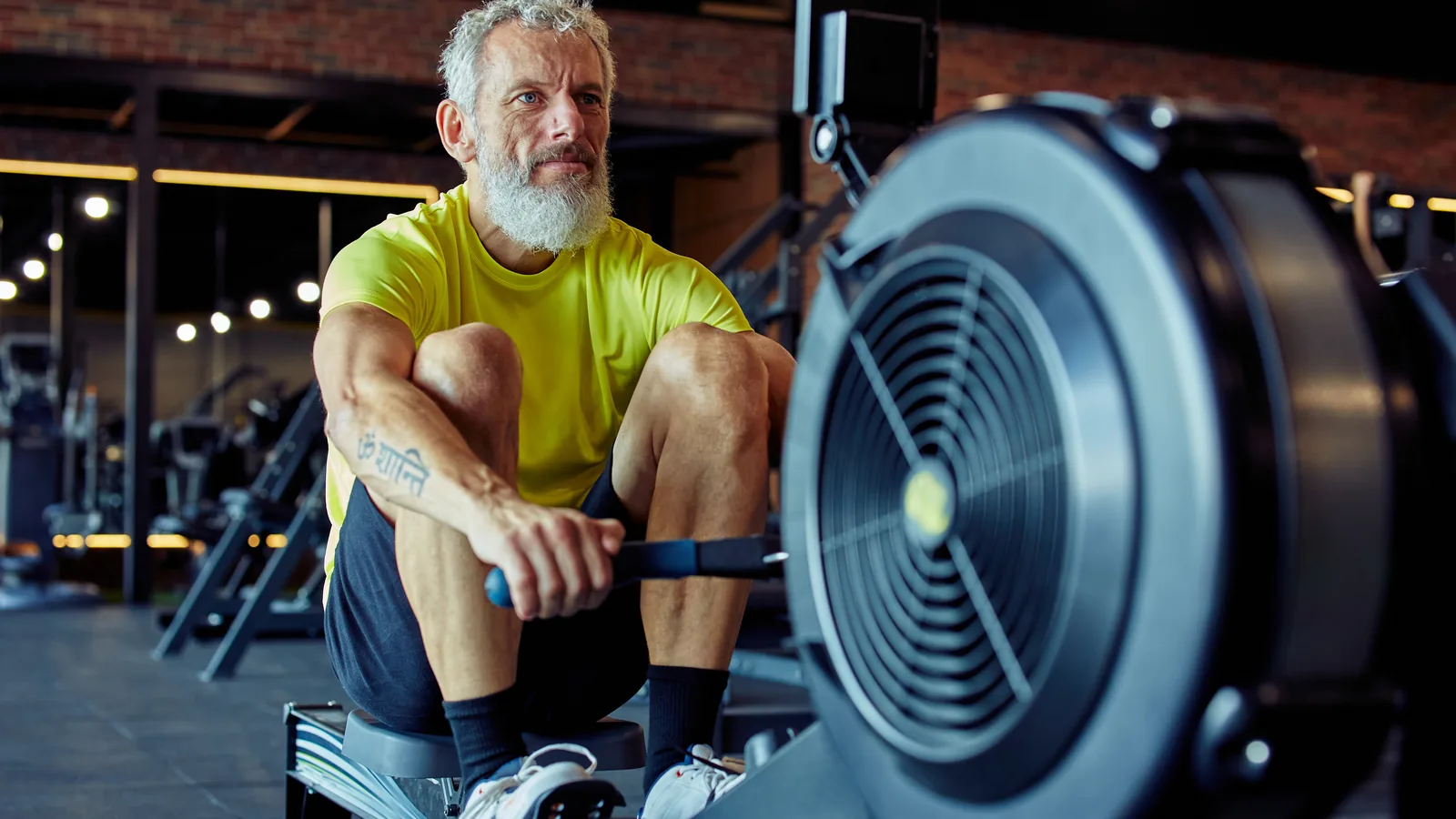
In a cohort of 1,897,197 Korean adults aged 60 and older followed for a median of roughly 10 to 11 years, men whose estimated arm and leg muscle mass fell in the lowest quarter had a 34 percent higher rate of Alzheimer-type dementia than men above it, and women a 27 percent higher rate. The study, published April 28, 2026 in Alzheimer's Research and Therapy and circulating in news reports this week, is one of three fitness markers with large primary datasets behind them. Here is what each measures, what it was associated with, and where the evidence stops.
Muscle mass
The Korean cohort drew on National Health Insurance Service screening records. Appendicular skeletal muscle mass was not scanned; it was estimated from body measurements and serum creatinine with equations validated against DXA in Koreans, and low mass was defined as the sex-specific lowest quartile. Dementia was identified from diagnosis codes plus prescriptions for anti-dementia medication, and 155,232 cases accrued. After adjusting for age, comorbidity, depression, smoking, alcohol, physical activity and income, the hazard ratio was 1.34 (95 percent confidence interval 1.32 to 1.36) in men and 1.27 (1.25 to 1.28) in women. The association was stronger in relatively younger and healthier participants and weakened with age. Funding came from an Inje University research grant. The authors name six limits: administrative misclassification of dementia, estimated rather than measured muscle, no strength or performance data so sarcopenia could not be formally defined, death treated as censoring, a comorbidity index that misses frailty and function, and a health-screening population that may be more health-seeking than average. It is an association in one country's records, not evidence that building muscle prevents dementia.
Cardiorespiratory fitness
JAMA Network Open published a retrospective cohort on October 19, 2018 of 122,007 adults who had a symptom-limited treadmill test at the Cleveland Clinic between 1991 and 2014 and were followed for a median of 8.4 years, about 1.1 million person-years, during which 13,637 died. Fitness was the peak estimated metabolic equivalents reached on the treadmill, sorted into age- and sex-specific bands: low (below the 25th percentile), below average, above average, high (75th to 97.6th) and elite (97.7th and up). The adjusted hazard of death in the low group was about five times that of the elite group (5.04, 4.10 to 6.20). Below-average fitness carried a 41 percent higher hazard than above-average, which the authors note is comparable to the hazard they measured for smoking (1.41) or diabetes (1.40). Even elite versus high fitness showed a difference (0.77). The authors list the usual limits of a referral population at one center: people sent for a treadmill test are not the general population, fitness was measured once, and unmeasured factors such as socioeconomic status could not be excluded. No funder is named beyond an author obtaining funding.
This is the paper behind the frequent claim that VO2 max predicts longevity. Strictly, it measured treadmill METs rather than directly measured oxygen uptake, and the two track each other closely but are not the same number.
Grip strength
The Lancet published results from the Prospective Urban Rural Epidemiology study on May 13, 2015: 139,691 adults in 17 countries across income levels, followed for a median of four years. Each 5-kilogram (11-pound) reduction in grip strength was associated with a 16 percent higher hazard of death from any cause (1.16, 1.13 to 1.20), 17 percent higher for cardiovascular death, 17 percent higher for non-cardiovascular death, 7 percent higher for heart attack and 9 percent higher for stroke. The authors describe grip strength as a simple, low-cost way to stratify risk and call for research on whether raising strength changes outcomes, a question the cohort could not answer. The Canadian Institutes of Health Research is the funder listed in the record; the paper refers to a fuller funding list in its acknowledgments.
What ties them together, and what does not
All three are cohort studies. Each shows that people who arrived at a measurement with more muscle, more aerobic capacity or more hand strength went on to have fewer deaths or diagnoses than people with less. None randomized anyone to train, so none shows that moving from one band to another changes the outcome, and reverse causation is live in each: early disease can lower muscle mass, treadmill time and grip before it is diagnosed. The second edition of the federal Physical Activity Guidelines for Americans does list reduced risk of dementia, including Alzheimer's disease, among the long-term benefits of physical activity for adults, alongside 150 to 300 minutes a week of moderate aerobic activity and muscle-strengthening on two or more days, which is the closest thing to a recommendation these markers connect to.
Grip strength and a treadmill test are both measurable in a clinic visit, and muscle mass can be estimated from the same kind of measures the Korean study used. The question for a clinician is which of these, if any, is worth tracking for you, and against which reference range.
This article reports research and expert guidance. It is not medical advice. Talk to your clinician before changing medication, treatment or a medical diet.
Sources
- Alzheimer's Research and Therapy: Impact of appendicular skeletal muscle mass on Alzheimer's disease in relation to age and comorbidities: an 8-year longitudinal follow-up study of a nationwide cohort
- JAMA Network Open: Association of Cardiorespiratory Fitness With Long-term Mortality Among Adults Undergoing Exercise Treadmill Testing
- The Lancet: Prognostic value of grip strength: findings from the Prospective Urban Rural Epidemiology (PURE) study
- U.S. Department of Health and Human Services: Physical Activity Guidelines for Americans, 2nd edition, Top 10 Things to Know
Loading comments…