












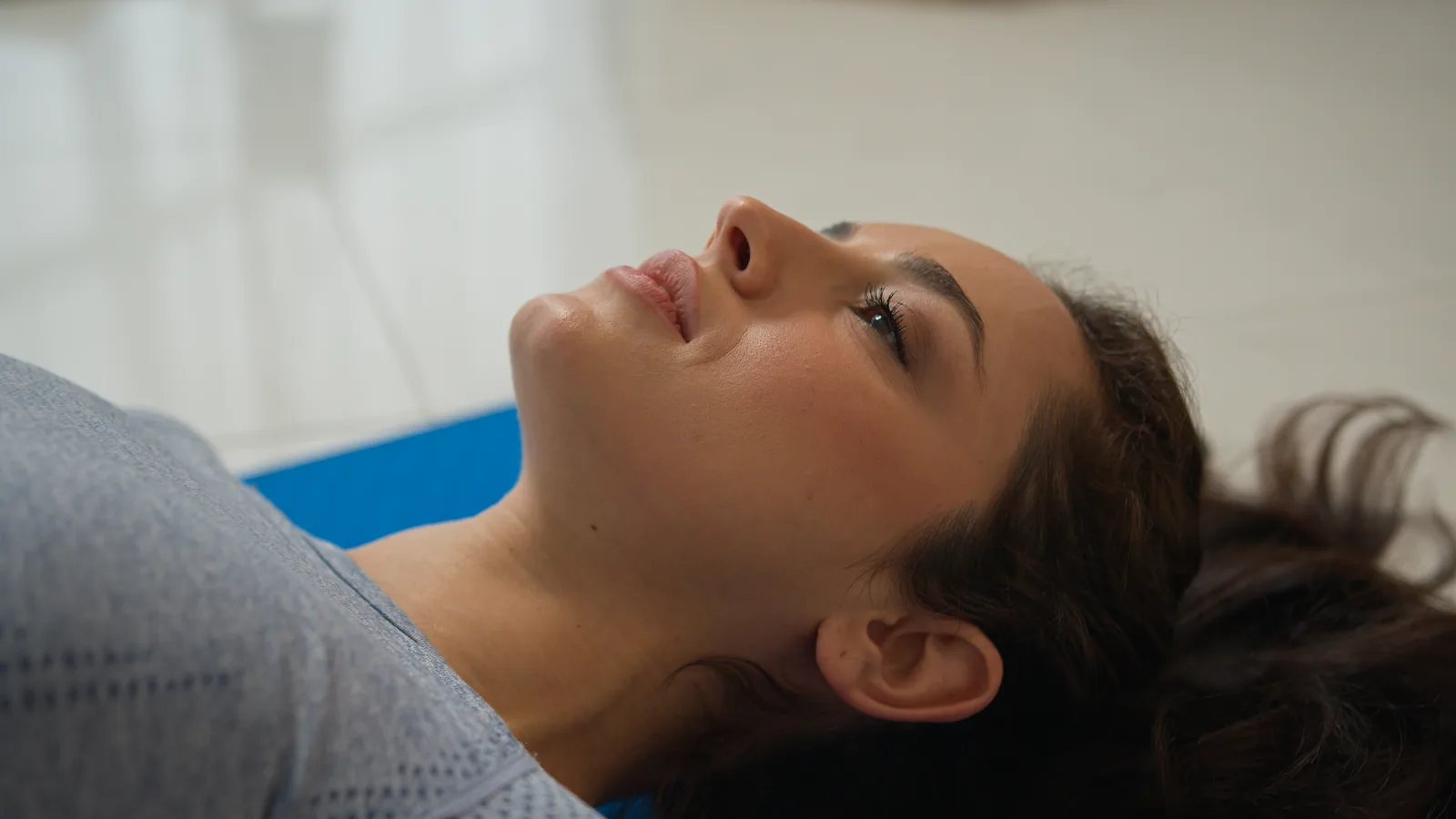
Breathwork, the practice of fast, connected breathing often done lying down to music, has a reputation for producing experiences that people compare to psychedelics. A small randomized trial from the Breathwork Lab at Brighton and Sussex Medical School in England put that comparison to a measured test against a familiar alternative, a guided body scan meditation, and found the breathwork session produced much larger altered-state and emotional effects on the questionnaires psychedelic researchers use. The study, called the Airways to Alteration (A2A) trial, was published in Frontiers in Psychology and registered in advance at ClinicalTrials.gov.
How the trial worked
The researchers recruited 24 healthy adults aged 18 to 65 who had tried conscious connected breathing at least once before without problems. Their median ages were in the mid 40s, and most were women. Twelve were randomly assigned to each group, and participants knew which session they were getting.
- Breathwork: one 90-minute session of conscious connected breathing, breathing continuously through the mouth with an active inhale, a relaxed exhale and no pause between breaths, to intense music that slowed as the session went on. The facilitators told participants beforehand to expect sensations such as cramping in the hands, temperature changes and strong emotion.
- Meditation: a 40-minute guided body scan lying down, after a few minutes of slow breathing at six breaths a minute, with soft music from the same playlist playing quietly. This group was not primed to expect emotional release.
The same facilitator led both. Right after the session, participants filled in standard scales for mystical-type experience, emotional breakthrough, altered states and depersonalization. About a week before and a week after, they also rated depression, anxiety, stress, well-being, sleep problems and fatigue.
What the breathwork group reported
On the mystical experience scale, the breathwork group's median total score was 14, against 8.5 in the meditation group. Emotional breakthrough scores were several times higher after breathwork, with a median of 336 against 57.5, and breathwork scored higher on two altered-state measures, the sense of boundlessness and changes in visual perception. A week later, the breathwork group rated their psychological insight and their sense of having changed their behavior well above the meditation group. Neither group reported any adverse events.
Some of the week-later results were more mixed. Both groups improved on depression, anxiety, stress and well-being, with no difference between them. Self-rated sleep problems dropped in the breathwork group and changed little after meditation. Fatigue was higher in the breathwork group.
What the study cannot tell you
The authors call the trial a preliminary exploration of what breathwork feels like, not a test of whether it treats anything, and they list its limits plainly. Twenty-four people is a small sample that can only detect large effects. Participants knew which session they had, and only the breathwork group was told to expect strong experiences, so expectation could have shaped the scores. The sessions also differed in more than breathing: the breathwork session ran more than twice as long and used louder, more intense music. Everyone in the trial was already experienced with this style of breathing, which may explain why nobody had a bad reaction, and the researchers did not measure breathing or blood gases to confirm what was happening physically.
The study was funded by ResearchHub's decentralized science fellowship and by DMT Quest, a nonprofit, and the authors report that neither funder had a role in the study.
Where it sits in the research
This trial describes what people experience during breathwork, in a small group with one week of follow-up. It does not show lasting benefits, and it does not show that breathwork and psychedelic drugs act the same way.
For anyone weighing a breathwork class, the trial's own design points to the practical questions: how long the session runs, whether the facilitator explains the physical sensations beforehand, and whether there is room to slow down or stop. The calmer, slower breathing used before the body scan is a different practice with different goals.
Loading comments…