












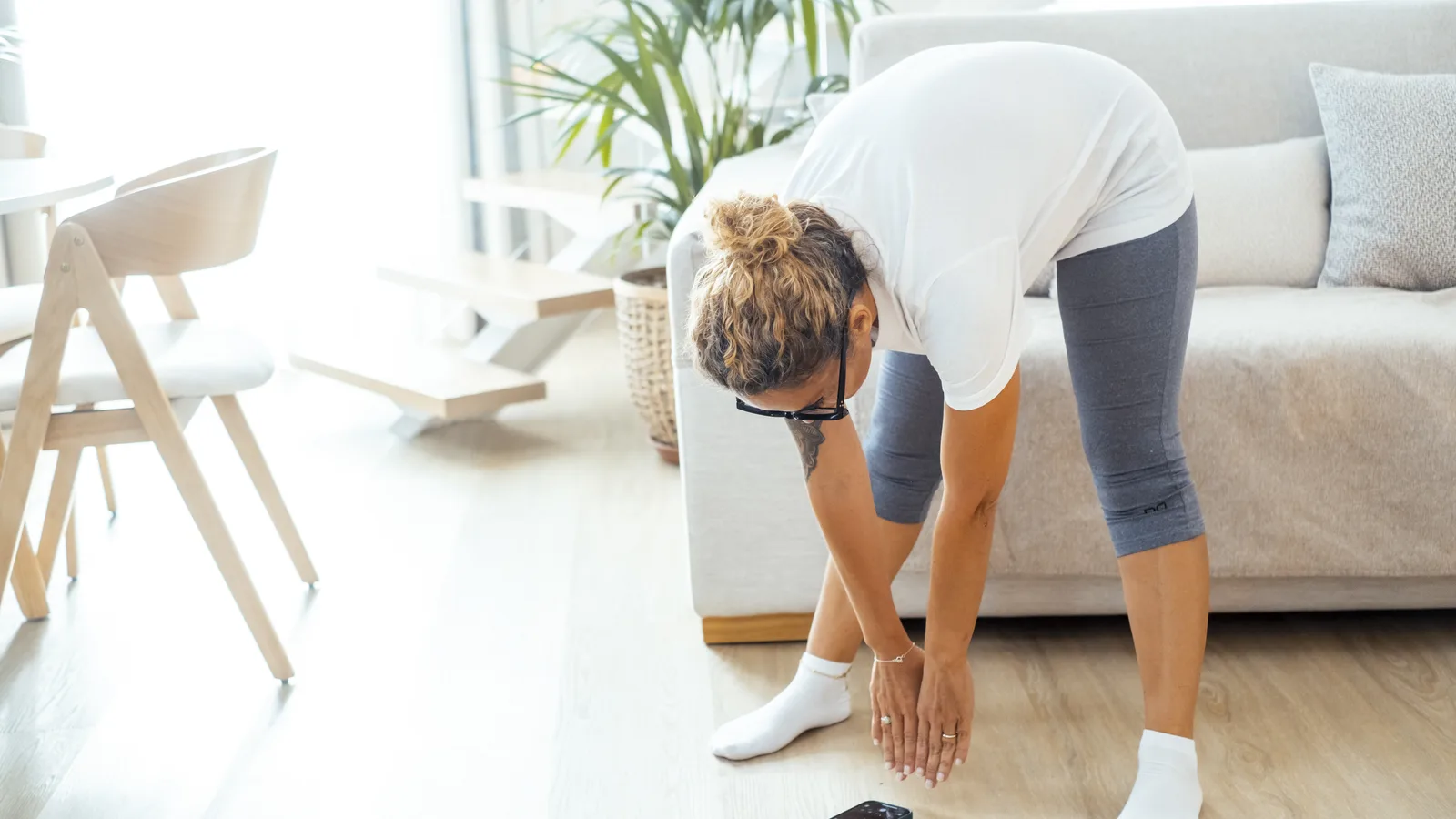
Apple is adding at-home movement evaluations to its redesigned Health app: guided tests of flexibility, strength, balance, movement mechanics and VO2 max that use the iPhone's camera and an Apple Watch rather than a visit to an exercise physiologist or physical therapist. The feature is in the iOS 27.3 developer beta as of November 3, and Apple says it reaches users as a free software update later this year.
How the tests work
According to Apple, the evaluations use vision-based AI models running on the iPhone to watch the movement and give real-time audio and visual feedback while the test is under way. Apple says the processing runs entirely on the device and that no video is ever recorded, stored or shared. The company says the tests were developed with input from clinicians.
Results feed the app's new Longevity tab, which tracks long-term measures across heart health, sleep, mental wellbeing, movement, metabolic health, hearing and nutrition. If an evaluation shows a weak spot, balance for example, Apple says the app offers an expert video and an exercise plan matched to the person's ability.
What you need
- An iPhone that supports Apple Intelligence, running the latest software. Some features are iPhone only.
- For the VO2 max test, an Apple Watch, AirPods Pro 3 or a third-party heart rate sensor.
- For Health Age, the related score that compares VO2 max, resting heart rate, sleep and heart rate variability against chronological age, an Apple Watch. Lab results such as A1c and LDL cholesterol can be added.
- Age 18 or older for some features.
Apple announced the Health redesign in September as coming first in U.S. English. The November update expands Health app language support to global English, Simplified and Traditional Chinese, French, Japanese, Korean, Norwegian, Portuguese, Spanish, Turkish and Vietnamese. Apple notes that some features may not be available in every region or language.
Where strength and balance fit
Strength and balance both appear in the federal Physical Activity Guidelines for Americans. Adults are asked to do muscle-strengthening activity for all major muscle groups on 2 or more days a week, and older adults to include balance training alongside aerobic and strength work. The guidelines also note that fall-prevention programs that include balance training generally meet about three times a week.
What it is not
Apple's announcements do not include data comparing the camera tests with in-person clinical assessments. A low score is a prompt to look closer, not a diagnosis, and anyone with pain, a recent fall or an injury is better served by a physical therapist's evaluation. The feature is still in a developer beta, and Apple says features are subject to change.
Loading comments…