












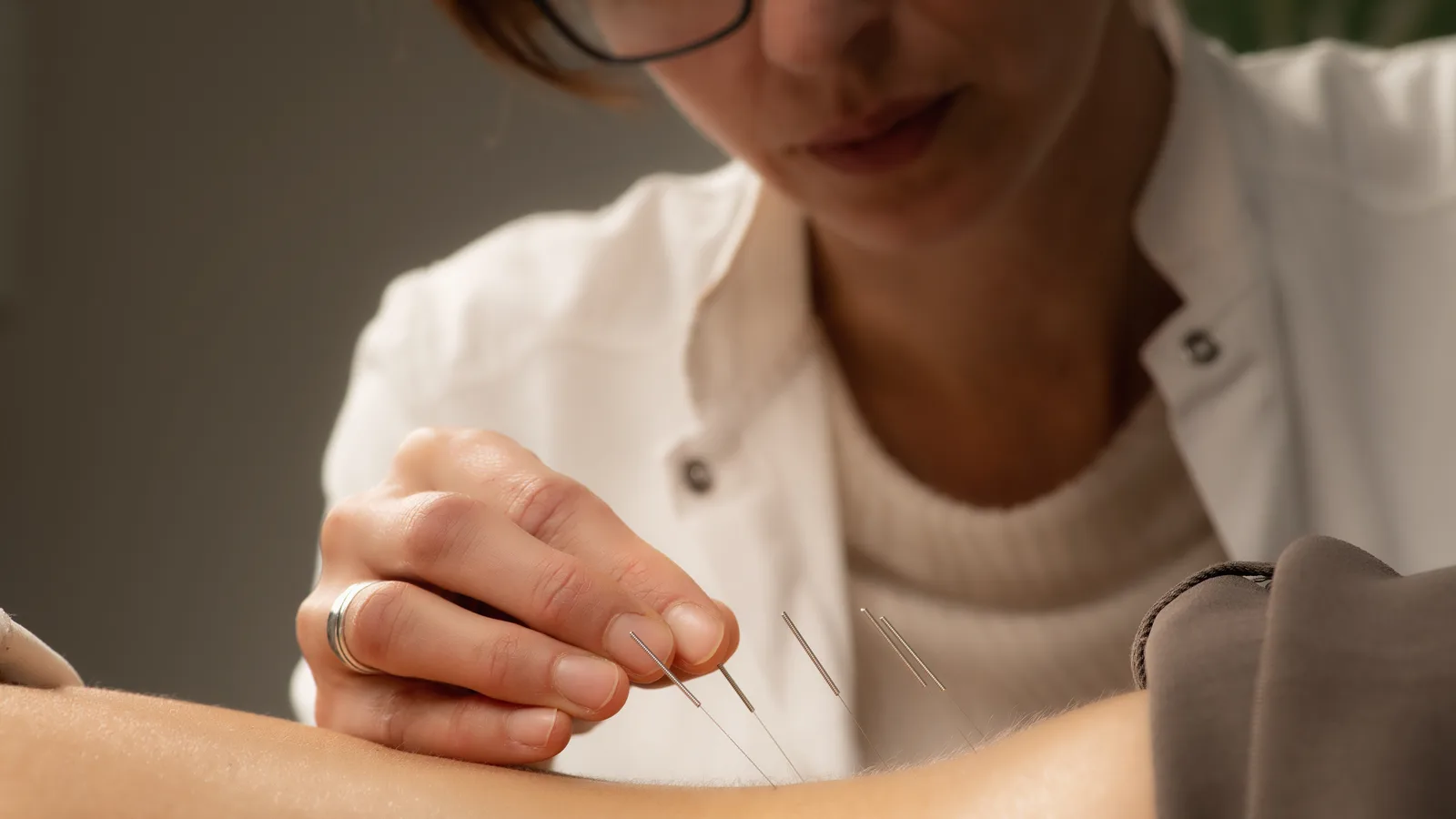
A traditional Chinese medicine procedure that leaves a small piece of thread under the skin at acupuncture points produced more weight loss than a sham version in a randomized trial of 132 women, according to results published online November 17 in Annals of Internal Medicine. The gap was modest: 1.8 kilograms, about 4 pounds, at 12 weeks.
What was tested
The procedure is called acupoint thread embedding. The trial ran in the acupuncture department of Shanghai Municipal Hospital of Traditional Chinese Medicine and enrolled women ages 18 to 45 with a body mass index of 24 or higher. (In the United States, the Centers for Disease Control and Prevention sets the start of the overweight range at 25.)
Half were randomly assigned to six sessions of thread embedding over 12 weeks. The other half got a sham: a shallow needle insertion at the same points, with no thread left behind and none of the needle handling that acupuncturists use. Both groups were then followed for another 12 weeks with no further sessions.
The women did not know which version they received, and neither did the staff who measured the outcomes or the analysts who ran the numbers. The acupuncturists necessarily did.
What changed
- At 12 weeks, the main outcome, BMI had fallen 0.7 points more in the thread group than in the sham group, and body weight 1.8 kilograms more.
- At 24 weeks, three months after the last session, the gaps had widened to 1.1 BMI points and 3.0 kilograms, about 6.6 pounds.
- Losing at least 5 percent of body weight by week 12 happened for 25.8 percent of the thread group and 9.1 percent of the sham group.
- Waist and hip measurements, body fat percentage and appetite scores also fell more with the real procedure.
What did not differ: cardiometabolic measures and the outcomes the women reported themselves. Side effects were mild and occurred at similar rates in both groups.
What the trial does not show
The authors list the limits themselves. It was one hospital. The participants were generally healthy Chinese women of reproductive age, so the result says nothing about men, older adults or people with obesity-related disease. The acupuncturists knew who got the real procedure. Follow-up ended at 24 weeks, and the trial was too small to detect uncommon harms.
The trial compared the procedure with a sham, not with a diet program, an exercise program or a weight-loss medication, so it cannot rank it against any of those. Its own summary calls the reductions modest but sustained over the follow-up period.
The primary funder was the National Facility for Translational Medicine in Shanghai.
For readers in the United States
This is a single trial, and its results apply most directly to the group it studied. Anyone weighing a needle-based procedure can ask a clinician two things the trial raises: who would perform it and with what training, and how a few pounds over three months compares with the options already on the table.
This article reports research and expert guidance. It is not medical advice. Talk to your clinician before changing medication, treatment or a medical diet.
Loading comments…