












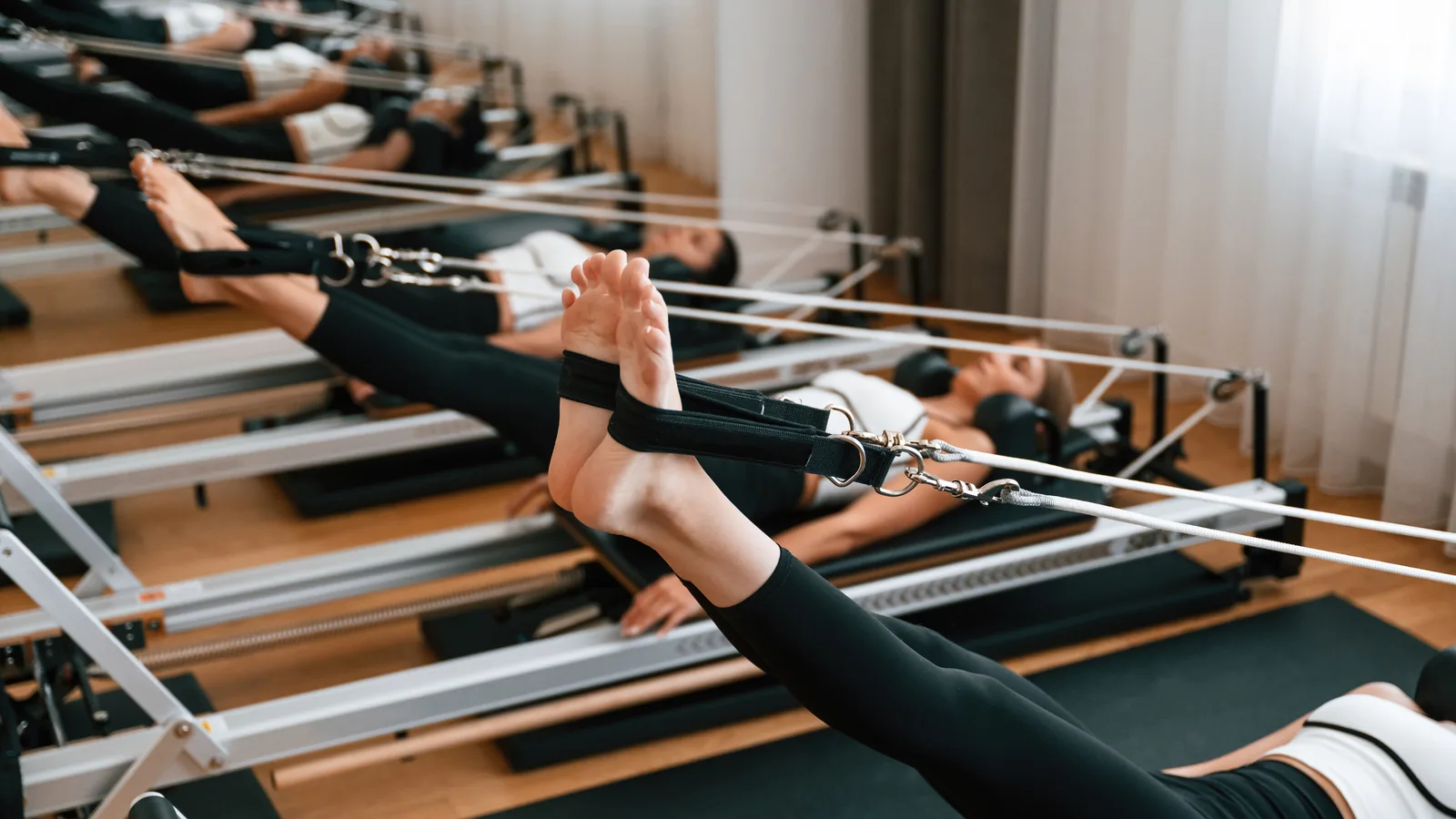
The category that holds Pilates, yoga, barre and mobility-focused training rose from No. 5 to No. 3 in the American College of Sports Medicine's 2027 Worldwide Fitness Trends report, published in ACSM's Health & Fitness Journal. Wearable technology held the top spot, the 10th time it has ranked No. 1, and group fitness classes made the largest jump in the top 10, from No. 13 to No. 7.
How the list is made
The report is in its 21st year. ACSM asked more than 1,400 fitness professionals to rate 50 possible trends by how widely they saw each one in the industry. The respondents were not asked which trends they liked or which ones work, and ACSM says plainly that a high ranking reflects visibility and adoption, not proof that a product or program is effective. That makes the list a picture of what gyms, studios and trainers are seeing, which is useful in its own right, but not a verdict on any method.
The 2027 top 10
- 1. Wearable technology. It has placed in the top three every year since it entered the survey in 2016, and in 2027 it was the only trend in the top three across every professional role, work setting and experience group in the report.
- 2. Mobile exercise apps, up from No. 4.
- 3. Balance, flow and core strength, the Pilates, yoga and barre category, up from No. 5.
- 4. Fitness programs for older adults, in the top five for a fifth year running.
- 5. Traditional strength training, up two places.
- 6. Exercise for weight management, with ACSM noting growing attention to keeping muscle and physical function as more people use obesity medications.
- 7. Group fitness classes, up six places.
- 8. Data-driven training technology, such as sleep quality, heart rate variability and training load, unchanged at No. 8.
- 9. Exercise for mental health and well-being, in the top 10 for a fourth year.
- 10. Influencer and ambassador-led fitness programs, back after falling out of the top 20 in 2026.
What the Pilates rise reflects
ACSM's own reading of the 2027 results is that people want expert-guided movement and the social side of training, which is why the Pilates, yoga and barre category and group classes both climbed in the same year. The category's description in the report centers on movement quality and functional performance rather than on any one studio format, so a mat class at a community center counts as much as a reformer studio.
For anyone weighing a class, the evidence on Pilates itself sits elsewhere: randomized trials and reviews have measured it mostly for low back pain and for strength and balance in women, with modest effects. LiveWell Wave has covered what those trials found, including how Pilates compares with the federal muscle-strengthening guidelines.
What it means for someone choosing a workout
The report's practical advice is to match the type of exercise to your own goals, abilities and preferences. With influencer-led programs back in the top 10, the authors stress qualified instruction and evidence-based practice. If a class or an app is new to you, two questions are worth asking before signing up: who designed it and what qualifications they hold, and whether the program follows the federal Physical Activity Guidelines of 150 minutes of moderate activity and two days of muscle strengthening a week.
Loading comments…